This list of my favorite books by Latino authors, in no particular order, does not constitute the entirety of Latino literature, nor does it even list all the really great works out there. There are many, many great Latino texts - something for every taste - but these are ones that really spoke to me, for one reason or another.
Also, though I link to Amazon, you can find these books in most bookstores. I encourage you to buy them from independent booksellers. If you don't have a good bookstore near you, you can easily order from Powell's City of Books in Portland, Oregon or from other independent bookstores online.
And now... the List:
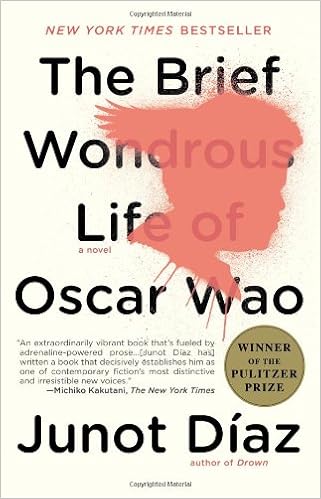
1. Junot Diaz - The Brief Wondrous Life of Oscar Wao
I really love this book. It speaks to the science fiction nerd in me and uses a wide variety of science fiction and fantasy references to give the narration a very specific feel. Diaz writes with a casual, vibrant tone that isn't for everyone, but for me his words invoke a setting and a cast of characters that build a world as rich and real as anything Dickens or Tolkien conjured up (though Diaz's prose sounds nothing like either of them). Oscar, the book's main protagonist, is an overweight Dominican-American nerd whose life is chronicled by various narrators, including his more worldly friend Yunior and his mother, who is haunted by their family's curse. And though the characters are richly nuanced, what I love most about this book is the way it deals with its main themes, like storytelling, identity, and desire.
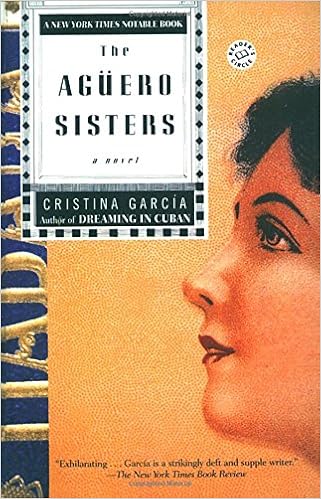
I've taught this book several times and what I love about it most is its multiplicity. The book embraces a large variety of voices, as each chapter jumps between several different members of the Agüero family. Though the text at first appears to be an allegory about the two faces of Cuba (it sets up the divide between two sisters, one who remains in Cuba and one who fled to the United States), the book is more than a simple two-sided debate about what it means to be Cuban or Cuban-American. The main mystery in the novel (who killed the sisters' mother) hovers over the text like one of the birds that serve as symbols throughout. The way the novel parcels out its meaning and sets up suspense hooked me - it's a good story, but also a very well written, multi-layered musing about how we form our identities and how everything is really only a constructed reality.
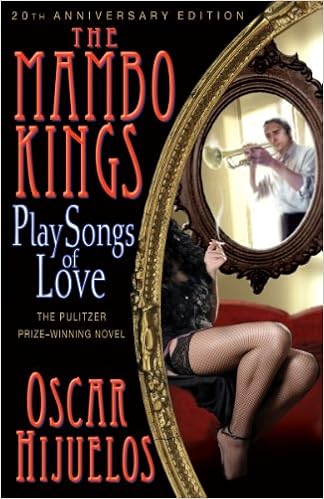
3. Oscar Hijuelos - The Mambo Kings Play Songs of Love
A quick plot summary of this book makes it sound less than it is. It follows the rise and fall of two Cuban brothers who try to make it rich playing mambo in New York after they have to flee Cuba. The book is more than just a tale of culture shock, ambition, and greed, however. By framing the story as a nostalgic, semi-lucid memory, Hijuelos gives himself room to tackle larger themes, especially when he touches on the importance of music, the malleability of memory, and the allure and fallibility of dreams. I do have some issues with the way women are treated by the novel (just look at the cover for the 20th Anniversary Edition and you can see what I mean), but it's still worth reading and enjoying.
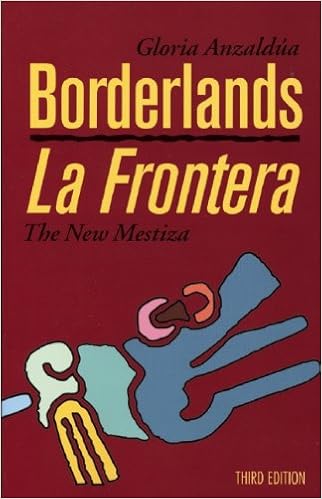
4. Gloria Anzaldúa - Borderlands / La Frontera
This book of essays and poems is pretty much essential reading. It's a feminist text, a Chicana text, a Latina text, and a text about identity, which actually makes it very hard to label at all. The book tries to tackle identity and its relationship to borders - physical borders and mental borders; borders forced upon us by society and borders we force upon ourselves. It's the kind of book you need to read several times, slowly.
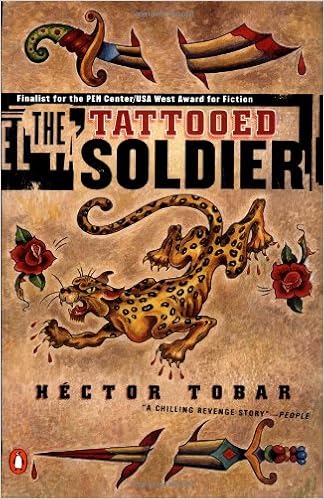
5. Hector Tobar - The Tattooed Soldier
This is another book I absolutely love to teach. The narrative seems to be pretty straightforward. It follows two men - a student who fled Guatemala when his wife was killed by a death squad during the civil war and a soldier who led many death squads during that same period of time. Both men are living in LA, trying to find new lives but haunted by their pasts. The book, however, doesn't allow us to see these men as hero and villain, protagonist and antagonist. It questions how we make our assumptions about people based on what we think we see or on what we want to see. In this book, history isn't as concrete as we'd like it to be, and that's what I love about it. There are no straightforward answers and it makes us question everything we think we know.
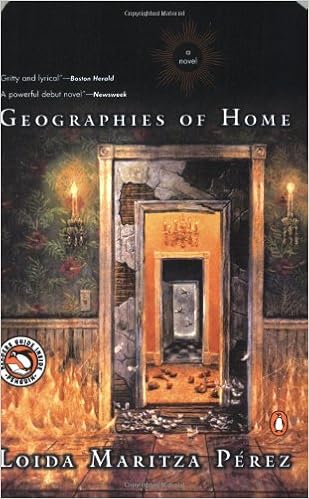
6. Loida Maritza Pérez - Geographies of Home
This book is probably the most controversial on my list, not because of the quality of the novel, but because of its contents. The book follows a Dominican-American family, focusing on how each woman in the family tries to live with or cope with violence and oppression. The book spares no feelings and has little sentimentality, but is still able to paint a vivid and emotional picture of lives defined by multiple contradictions and cultures. I especially like this book because it acknowledges the many forms machismo can take within Latino culture and pairs it with the patriarchal violence that can affect women within American society, too.
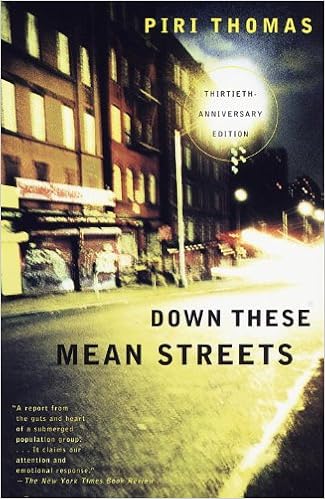
7. Piri Thomas - Down These Mean Streets
There are quite a few great memoirs by Latino authors, but I really like this one because it reads more like a novel than a memoir. It's especially interesting because of how it deals with race. The book follows the story of a Puerto Rican hooligan who grows up on the streets of Spanish Harlem, matures in prison, and finds himself on a journey through the American South. Although this book doesn't have any major female characters to speak of, I still think it's important and worth reading.
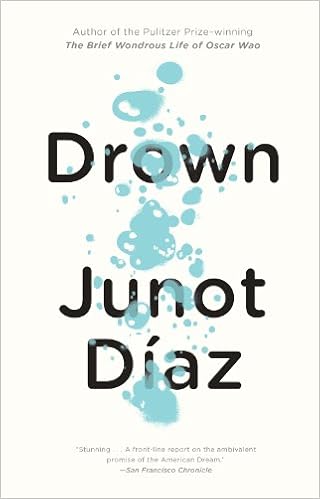
8. Junot Diaz - Drown
This one is a book of short stories, most of them narrated by the same character, Yunior. It covers a wide range of situations a Dominican-American youth might find himself in - I like to think of it as the alternate universe approach to storytelling. The opening story is especially interesting, as it serves as both an introduction to the characters and an allegory for the Dominican Republic under Trujillo's authoritarian regime.
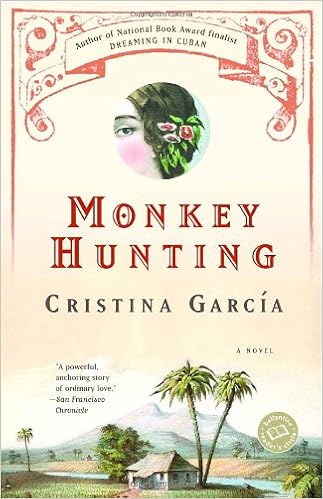
9. Cristina García - Monkey Hunting
This book is great because it comes from a unique perspective. It follows several generations of a Chinese-Cuban-American family, each chapter switching between their lives in China, Cuba, the United States. García does a great job getting us acquainted with the history of Chinese immigration to Cuba and the way Chinese-Cubans have been a part of big historical events on the island. The book also invites us to compare the way immigrants have been treated throughout the Americas, emphasizing the way culture, language, and perceived racial identity affect characters depending on when and where they live.
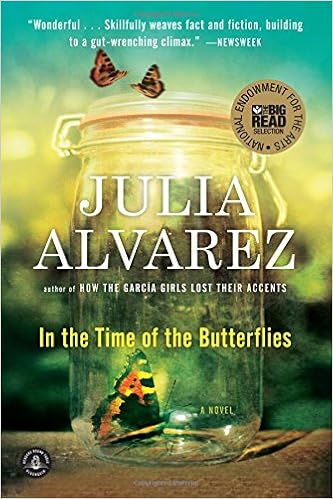
10. Julia Alvarez - In the Time of the Butterflies
This book, based on the real-life Mirabal sisters who plotted against the Trujillo regime in the Dominican Republic, is a fascinating read. Both intimate and broad in scope, it emphasizes the fallibility of memory and the pull of nostalgia. It also highlights the many ways one can fight and, perhaps, overcome tyranny.

No comments:
Post a Comment