This is a list of my favorite books by Latin American authors, in no particular order. There is a huge number and variety of Latin American books, and there are so many amazing and wonderful novels, poems, plays, and stories out there. I'm just listing these to let you know what I like and tempt some of you into perhaps reading a few. Enjoy!
Also, though I am linking these texts to Amazon, I encourage everyone to buy from independent booksellers. I am only going to list books that have decent English translations (and I'll link to both the Spanish or Portuguese editions and the translations) - so you don't have to read Spanish or Portuguese to fall in love with any of these books.
And now... the List:
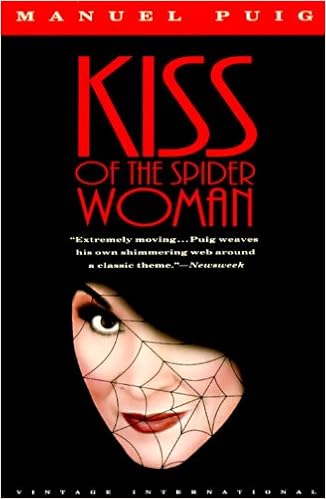
1. Manuel Puig - Kiss of the Spider Woman / El beso de la mujer araña
I really, really love this book. It was part of my dissertation and I've taught it many times. Though it's a novel, it's written as dialogue; there are no speaker tags, no extra descriptions of people, places, or things, and only a few extra pieces of information that come from government documents. The story follows two men imprisoned in Argentina during the early 1970s. They come from completely different backgrounds and share nothing in common, yet are able to communicate and eventually see each other as human beings by talking about movies. I love the way the novel immerses you in culture - film culture, political culture, popular culture, counter-culture. It's a novel about patriarchy, feminism, and queer theory, but it's also a novel about humanity and what it means to be there for someone else. Probably one of my favorite books, period.
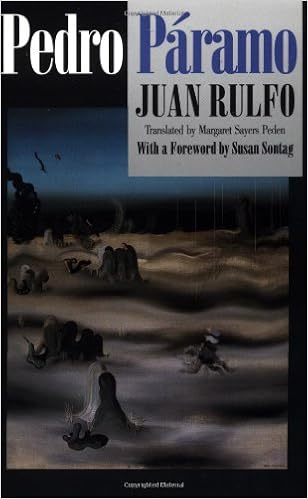
2. Juan Rulfo - Pedro Páramo / Pedro Páramo
I've read this book multiple times for many different purposes. I studied it in college and graduate school and wrote on it for a grad class on Memory and Reenactment. It's such a strange little book. The story starts with a common enough trope - a boy returns to his home to find his father. Yet nothing is common in this novel. The father is not what he seems, the town may or may not be actually real, and the boy may or may not actually get there. Who is dead? Who is alive? Who can you believe? What actually happens? Yet for all these questions, the main point of the novel is clear and haunting.
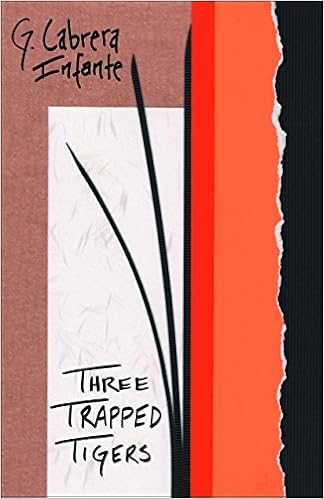
3. Guillermo Cabrera Infante - Three Trapped Tigers / Tres tristes tigres
This book is all about impressions. Reading it is like listening to really complicated jazz - it doesn't make it easy for the reader to find a thread to follow, but once you get into the rhythm of the piece and mesh with the chord progressions, you can just float along with improvisations. The story is ostensibly about a couple of friends out for a night in Havana, Cuba. But the book is really about the essence of Cuba before and after the Revolution, the changes that occurred, the way things affected popular culture, race relations, society, language. Cabrera Infante plays with words, twisting and turning them as he invites the reader to look at everything from multiple angles. I love this book because it isn't so much a novel as a documentary without a narrator.
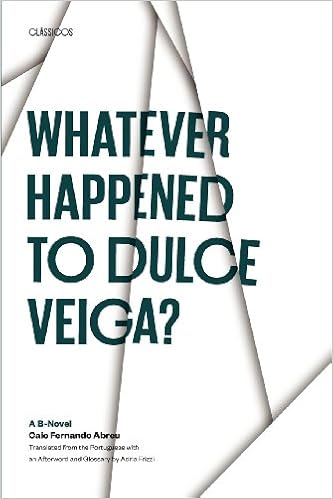
4. Caio Fernando Abreu - Whatever Happened to Dulce Veiga?: A B-Novel / Onde andará Dulce Veiga?: Um romance B
Another book I really, really love. This one was also in my dissertation and I love to teach it. It's the story of a middle aged journalist who has lost everything: his job, his lover, his sense of self. But when he stumbles across the mystery of what happened to Dulce Veiga, a singer who disappeared 20 years earlier, he finds (perhaps) a way forward, a way to deal with his demons and find himself (and Dulce) again. The book deals with so many issues - cultural appropriation, imperialism, AIDS, gender politics, social and economic status, popular culture, etc., etc. - but what really gets me is the way the narrator gets lost in all of it. He is a writer and gets swept up in the words and metaphors needed to tell us about what's going on. It's a beautiful and haunting book.
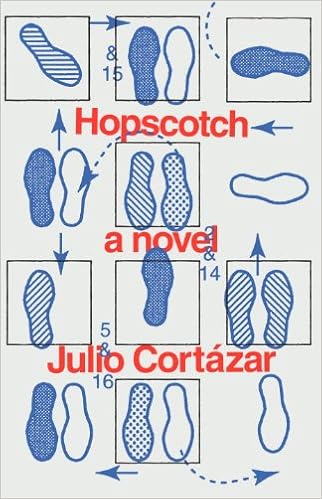
5. Julio Cortázar - Hopscotch / Rayuela
If you haven't guessed already, I love crazy books. And this one is no exception. The beginning of the book gives you two options for reading: 1) you can simple follow the page numbers and read front to back (leaving out the disposable chapters at the end, of course) or 2) you can follow the numbers listed in the author's note that lead you on a wild goose chase through the novel (this version includes the disposable chapters, but leaves out at least one other chapter, whose sentences are contained word for word in other parts of the text). Of course, you could always try the unwritten option 3) read it any way you choose. The story follows a young man search for his girlfriend in Paris... Or does it follow an Argentine ex-pat going home to Buenos Aires...? Or does it give us writing tips from an author who was just hit by a car...? Everything depends on how you want to read it. I've read it all 3 ways, and I like hopscotch (option 2) the best.
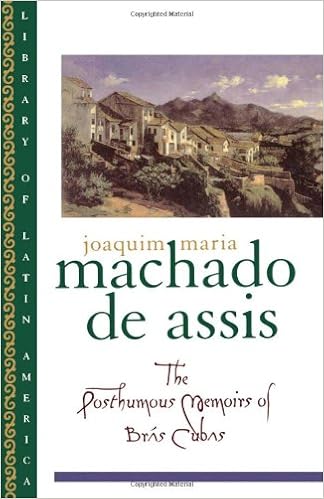
6. Joaquim Maria Machado de Assis - The Posthumous Memoirs of Bras Cubas / Memórias Póstumas de Brás Cubas
The second Brazilian book on my list, this is one of several Machado de Assis novels I could have added. While I love most of his stuff, this book is a particular favorite because it was so ahead of its time. It's both modern and post-modern, even though neither of those terms existed when the book was written in 1881. The book is narrated by a man who has died, a man who wants to reflect on his life and why he ended up the way he did. But can you really believe him? Is he telling the truth or is he trying to flatter himself? Is he hiding anything? Is any of this real? I love this book because nothing is as it seems. And so much of it is about the act of writing itself. The sarcasm and sardonic wit that run through the book doesn't hurt, either.
7. Jorge Luis Borges - Collected Fictions / Ficciones, El Aleph, and others
I had a hard time deciding on my favorite Borges story collection, so I decided to pick all of them. There is a very handy collection for English readers, but Spanish readers may have to read his stories by picking up the books separately - Amazon doesn't have a good collected works in stock right now. Borges, in a few words, is simply amazing. Like Poe (one of his favorite authors), Borges wrote only short fiction, both poetry and prose, as well as short nonfiction. His stories is very idiosyncratic and his influence extends far beyond Latin America. I love his stuff because of its emphasis on fiction, on the way fake things, imagined realities, and impossible truths reveal so much about what is really going on in the world. His stories show us why fiction is so important in so many ways. Of course, his stories are also super dense, every esoteric, and not meant for skimming. Not a good beach read... unless you like your books creepy, paradoxical, and labyrinthine.
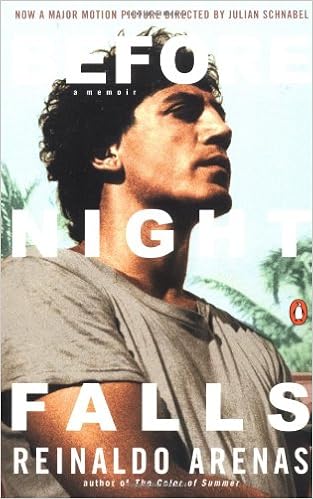
8. Reinaldo Arenas - Before Night Falls / Antes que anochezca
I like a lot of Arenas' books, but his memoir stands out as a truly important text. Most of the other books on this list are complicated or experimental or just a bit weird, but this one has a quiet poetry to it that allows Arenas' life to pull the reader along. His life, as many have pointed out, sounds more like a Kafka story than reality. The appeal of this book is the story itself, following Arenas from his childhood in rural Cuba to his participation in the Revolution, his life as a writer in the 1960s and 70s, his incarceration for homosexuality, his several attempts to flee Cuba, his eventual escape to New York, and his death as a man without a nation. And though the book feels like fiction (and I usually like fiction better), the crazy reality of it all is what draws me to it.
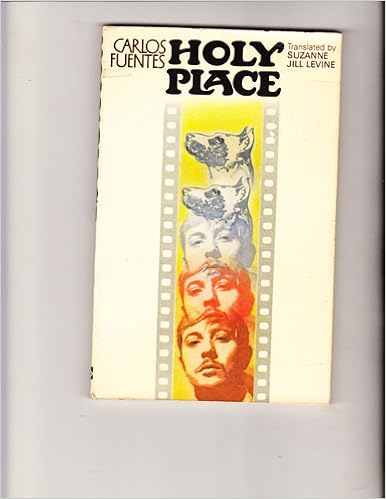
9. Carlos Fuentes - Holy Place / Zona sagrada
Apparently this book is rather hard to find - I don't think it's even in print anymore. I love it anyway. It's absolutely bonkers and probably not Fuentes' best novel, but I have a big soft spot for it. I wrote on it in my dissertation, though I would never, ever try to teach it - it's just too nuts. My dissertation advisor read it, shook his head, and told me I was crazy. The story follows the son of a Mexican movie star who has a hard time separating himself from his mother and her world. The book involves them sharing lovers (maybe?), several pretty crazy dream sequences (or are they real?), and the eventual commitment of the narrator to a lunatic asylum. Of course, the narrator eventually gets out and promptly turns into a dog (or does he?). It's all absolutely wild and over the top, but I love the way it jumps from one insane scene to the next. The book is rife with wild mythological allusions, multiple psychoanalytic theories, and myriad film references and popular culture clichés. It's a crazy mess, but one you can't help but enjoy (well... one I can't help but enjoy).
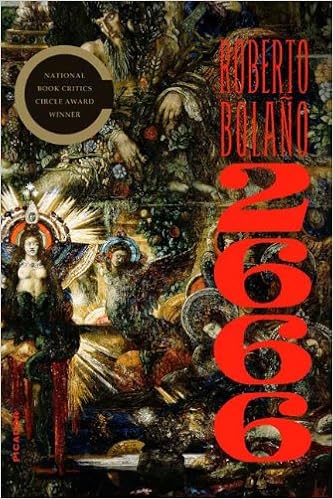
10. Roberto Bolaño - 2666 / 2666
This is probably one of the best books to come out of the last decade, in any language; this novel is simply amazing. It's huge and sweeping, but really hard to put down. It's the search for a killer, the search for an author, and the search for some kind of meaning in a meaningless world. It's about femicide in Mexico, academic posturing and bravado, and the little details that make a life important, even if that life is just another lost in a Mexican border town. This book is deep, dense, and haunting - and important. Read anything you can by Bolaño, but know that this is his masterwork.

No comments:
Post a Comment