A Few Quick Notes:
This is a list of my favorite books by Latin American authors, in no particular order. There is a huge number and variety of Latin American books, and there are so many amazing and wonderful novels, poems, plays, and stories out there. I'm just listing these to let you know what I like and tempt some of you into perhaps reading a few. Enjoy!
Also, though I am linking these texts to Amazon, I encourage everyone to buy from independent booksellers. I am only going to list books that have decent English translations (and I'll link to both the Spanish or Portuguese editions and the translations) - so you don't have to read Spanish or Portuguese to fall in love with any of these books.
And now... the List:
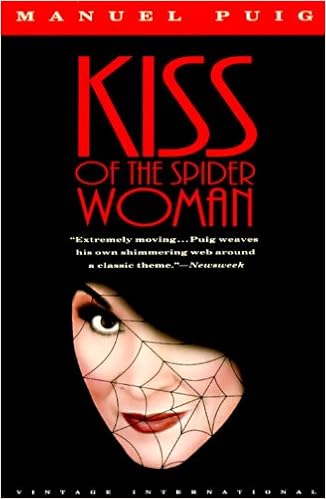
1. Manuel Puig - Kiss of the Spider Woman / El beso de la mujer araña
I really, really love this book. It was part of my dissertation and I've taught it many times. Though it's a novel, it's written as dialogue; there are no speaker tags, no extra descriptions of people, places, or things, and only a few extra pieces of information that come from government documents. The story follows two men imprisoned in Argentina during the early 1970s. They come from completely different backgrounds and share nothing in common, yet are able to communicate and eventually see each other as human beings by talking about movies. I love the way the novel immerses you in culture - film culture, political culture, popular culture, counter-culture. It's a novel about patriarchy, feminism, and queer theory, but it's also a novel about humanity and what it means to be there for someone else. Probably one of my favorite books, period.
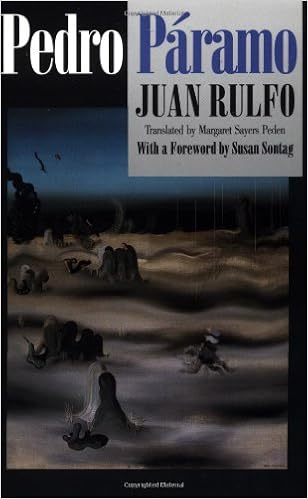
2. Juan Rulfo - Pedro Páramo / Pedro Páramo
I've read this book multiple times for many different purposes. I studied it in college and graduate school and wrote on it for a grad class on Memory and Reenactment. It's such a strange little book. The story starts with a common enough trope - a boy returns to his home to find his father. Yet nothing is common in this novel. The father is not what he seems, the town may or may not be actually real, and the boy may or may not actually get there. Who is dead? Who is alive? Who can you believe? What actually happens? Yet for all these questions, the main point of the novel is clear and haunting.
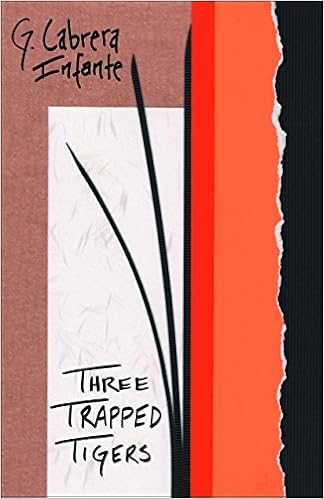
3. Guillermo Cabrera Infante - Three Trapped Tigers / Tres tristes tigres
This book is all about impressions. Reading it is like listening to really complicated jazz - it doesn't make it easy for the reader to find a thread to follow, but once you get into the rhythm of the piece and mesh with the chord progressions, you can just float along with improvisations. The story is ostensibly about a couple of friends out for a night in Havana, Cuba. But the book is really about the essence of Cuba before and after the Revolution, the changes that occurred, the way things affected popular culture, race relations, society, language. Cabrera Infante plays with words, twisting and turning them as he invites the reader to look at everything from multiple angles. I love this book because it isn't so much a novel as a documentary without a narrator.
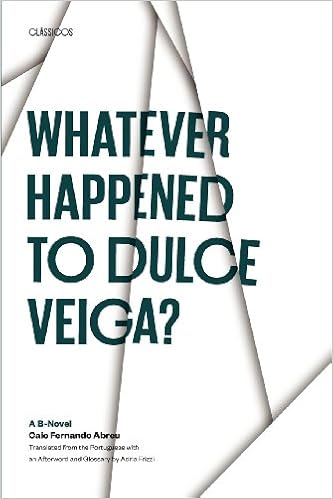
4. Caio Fernando Abreu - Whatever Happened to Dulce Veiga?: A B-Novel / Onde andará Dulce Veiga?: Um romance B
Another book I really, really love. This one was also in my dissertation and I love to teach it. It's the story of a middle aged journalist who has lost everything: his job, his lover, his sense of self. But when he stumbles across the mystery of what happened to Dulce Veiga, a singer who disappeared 20 years earlier, he finds (perhaps) a way forward, a way to deal with his demons and find himself (and Dulce) again. The book deals with so many issues - cultural appropriation, imperialism, AIDS, gender politics, social and economic status, popular culture, etc., etc. - but what really gets me is the way the narrator gets lost in all of it. He is a writer and gets swept up in the words and metaphors needed to tell us about what's going on. It's a beautiful and haunting book.
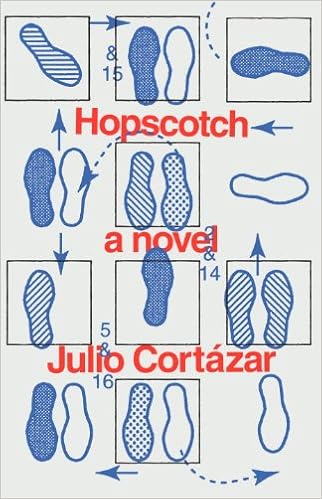
5. Julio Cortázar - Hopscotch / Rayuela
If you haven't guessed already, I love crazy books. And this one is no exception. The beginning of the book gives you two options for reading: 1) you can simple follow the page numbers and read front to back (leaving out the disposable chapters at the end, of course) or 2) you can follow the numbers listed in the author's note that lead you on a wild goose chase through the novel (this version includes the disposable chapters, but leaves out at least one other chapter, whose sentences are contained word for word in other parts of the text). Of course, you could always try the unwritten option 3) read it any way you choose. The story follows a young man search for his girlfriend in Paris... Or does it follow an Argentine ex-pat going home to Buenos Aires...? Or does it give us writing tips from an author who was just hit by a car...? Everything depends on how you want to read it. I've read it all 3 ways, and I like hopscotch (option 2) the best.
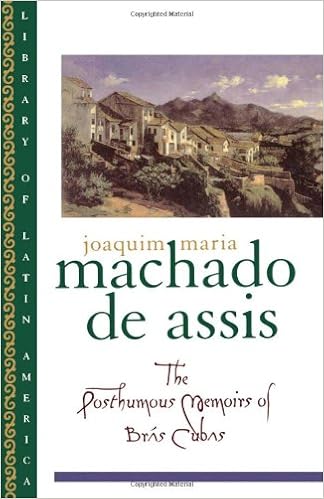
6. Joaquim Maria Machado de Assis - The Posthumous Memoirs of Bras Cubas / Memórias Póstumas de Brás Cubas
The second Brazilian book on my list, this is one of several Machado de Assis novels I could have added. While I love most of his stuff, this book is a particular favorite because it was so ahead of its time. It's both modern and post-modern, even though neither of those terms existed when the book was written in 1881. The book is narrated by a man who has died, a man who wants to reflect on his life and why he ended up the way he did. But can you really believe him? Is he telling the truth or is he trying to flatter himself? Is he hiding anything? Is any of this real? I love this book because nothing is as it seems. And so much of it is about the act of writing itself. The sarcasm and sardonic wit that run through the book doesn't hurt, either.
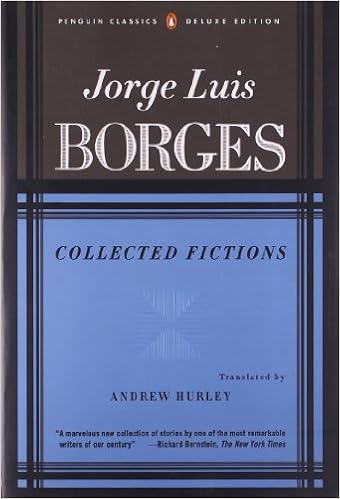
7. Jorge Luis Borges - Collected Fictions / Ficciones, El Aleph, and others
I had a hard time deciding on my favorite Borges story collection, so I decided to pick all of them. There is a very handy collection for English readers, but Spanish readers may have to read his stories by picking up the books separately - Amazon doesn't have a good collected works in stock right now. Borges, in a few words, is simply amazing. Like Poe (one of his favorite authors), Borges wrote only short fiction, both poetry and prose, as well as short nonfiction. His stories is very idiosyncratic and his influence extends far beyond Latin America. I love his stuff because of its emphasis on fiction, on the way fake things, imagined realities, and impossible truths reveal so much about what is really going on in the world. His stories show us why fiction is so important in so many ways. Of course, his stories are also super dense, every esoteric, and not meant for skimming. Not a good beach read... unless you like your books creepy, paradoxical, and labyrinthine.
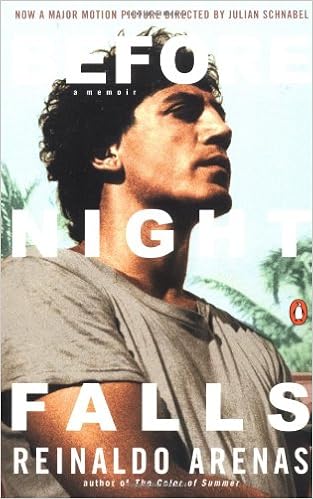
8. Reinaldo Arenas - Before Night Falls / Antes que anochezca
I like a lot of Arenas' books, but his memoir stands out as a truly important text. Most of the other books on this list are complicated or experimental or just a bit weird, but this one has a quiet poetry to it that allows Arenas' life to pull the reader along. His life, as many have pointed out, sounds more like a Kafka story than reality. The appeal of this book is the story itself, following Arenas from his childhood in rural Cuba to his participation in the Revolution, his life as a writer in the 1960s and 70s, his incarceration for homosexuality, his several attempts to flee Cuba, his eventual escape to New York, and his death as a man without a nation. And though the book feels like fiction (and I usually like fiction better), the crazy reality of it all is what draws me to it.
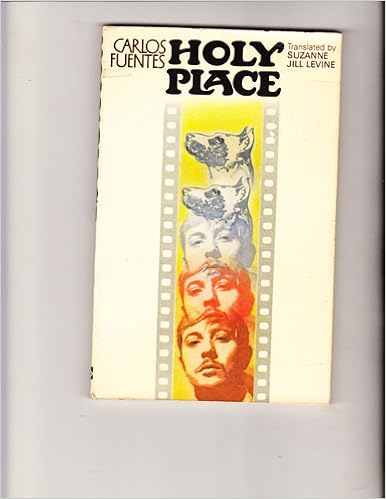
9. Carlos Fuentes - Holy Place / Zona sagrada
Apparently this book is rather hard to find - I don't think it's even in print anymore. I love it anyway. It's absolutely bonkers and probably not Fuentes' best novel, but I have a big soft spot for it. I wrote on it in my dissertation, though I would never, ever try to teach it - it's just too nuts. My dissertation advisor read it, shook his head, and told me I was crazy. The story follows the son of a Mexican movie star who has a hard time separating himself from his mother and her world. The book involves them sharing lovers (maybe?), several pretty crazy dream sequences (or are they real?), and the eventual commitment of the narrator to a lunatic asylum. Of course, the narrator eventually gets out and promptly turns into a dog (or does he?). It's all absolutely wild and over the top, but I love the way it jumps from one insane scene to the next. The book is rife with wild mythological allusions, multiple psychoanalytic theories, and myriad film references and popular culture clichés. It's a crazy mess, but one you can't help but enjoy (well... one I can't help but enjoy).
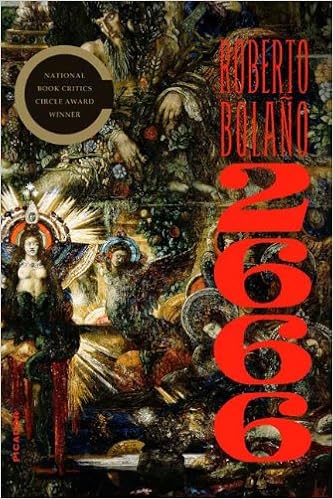
10. Roberto Bolaño - 2666 / 2666
This is probably one of the best books to come out of the last decade, in any language; this novel is simply amazing. It's huge and sweeping, but really hard to put down. It's the search for a killer, the search for an author, and the search for some kind of meaning in a meaningless world. It's about femicide in Mexico, academic posturing and bravado, and the little details that make a life important, even if that life is just another lost in a Mexican border town. This book is deep, dense, and haunting - and important. Read anything you can by Bolaño, but know that this is his masterwork.
Tuesday, December 29, 2015
Friday, December 11, 2015
My 10 Favorite Latino Books
A Few Quick Notes:
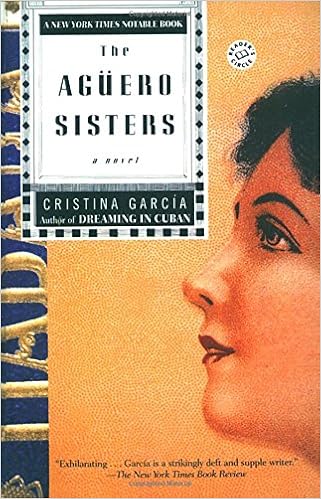
2. Cristina García - The Agüero Sisters
I've taught this book several times and what I love about it most is its multiplicity. The book embraces a large variety of voices, as each chapter jumps between several different members of the Agüero family. Though the text at first appears to be an allegory about the two faces of Cuba (it sets up the divide between two sisters, one who remains in Cuba and one who fled to the United States), the book is more than a simple two-sided debate about what it means to be Cuban or Cuban-American. The main mystery in the novel (who killed the sisters' mother) hovers over the text like one of the birds that serve as symbols throughout. The way the novel parcels out its meaning and sets up suspense hooked me - it's a good story, but also a very well written, multi-layered musing about how we form our identities and how everything is really only a constructed reality.
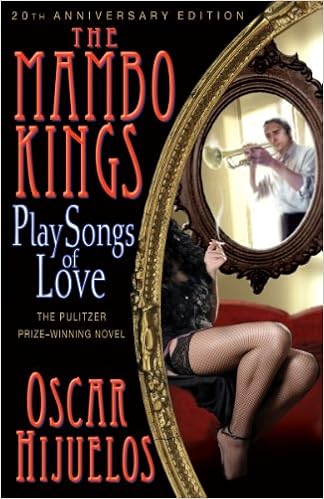
3. Oscar Hijuelos - The Mambo Kings Play Songs of Love
A quick plot summary of this book makes it sound less than it is. It follows the rise and fall of two Cuban brothers who try to make it rich playing mambo in New York after they have to flee Cuba. The book is more than just a tale of culture shock, ambition, and greed, however. By framing the story as a nostalgic, semi-lucid memory, Hijuelos gives himself room to tackle larger themes, especially when he touches on the importance of music, the malleability of memory, and the allure and fallibility of dreams. I do have some issues with the way women are treated by the novel (just look at the cover for the 20th Anniversary Edition and you can see what I mean), but it's still worth reading and enjoying.
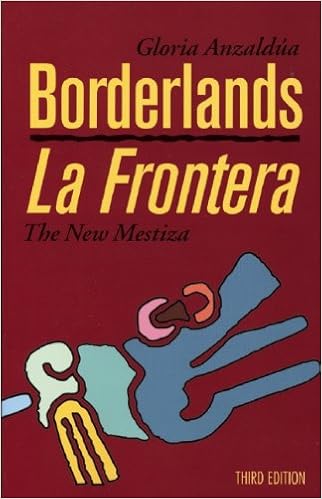
4. Gloria Anzaldúa - Borderlands / La Frontera
This book of essays and poems is pretty much essential reading. It's a feminist text, a Chicana text, a Latina text, and a text about identity, which actually makes it very hard to label at all. The book tries to tackle identity and its relationship to borders - physical borders and mental borders; borders forced upon us by society and borders we force upon ourselves. It's the kind of book you need to read several times, slowly.
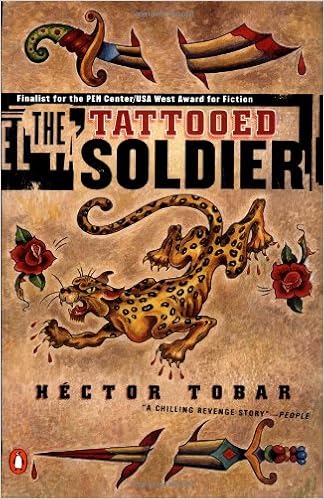
5. Hector Tobar - The Tattooed Soldier
This is another book I absolutely love to teach. The narrative seems to be pretty straightforward. It follows two men - a student who fled Guatemala when his wife was killed by a death squad during the civil war and a soldier who led many death squads during that same period of time. Both men are living in LA, trying to find new lives but haunted by their pasts. The book, however, doesn't allow us to see these men as hero and villain, protagonist and antagonist. It questions how we make our assumptions about people based on what we think we see or on what we want to see. In this book, history isn't as concrete as we'd like it to be, and that's what I love about it. There are no straightforward answers and it makes us question everything we think we know.
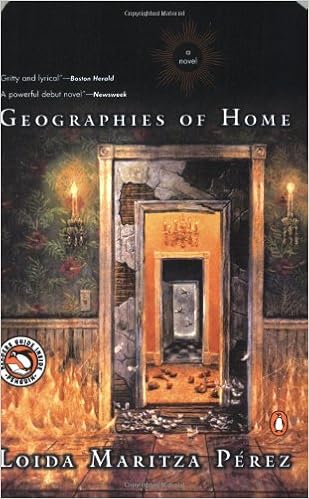
6. Loida Maritza Pérez - Geographies of Home
This book is probably the most controversial on my list, not because of the quality of the novel, but because of its contents. The book follows a Dominican-American family, focusing on how each woman in the family tries to live with or cope with violence and oppression. The book spares no feelings and has little sentimentality, but is still able to paint a vivid and emotional picture of lives defined by multiple contradictions and cultures. I especially like this book because it acknowledges the many forms machismo can take within Latino culture and pairs it with the patriarchal violence that can affect women within American society, too.
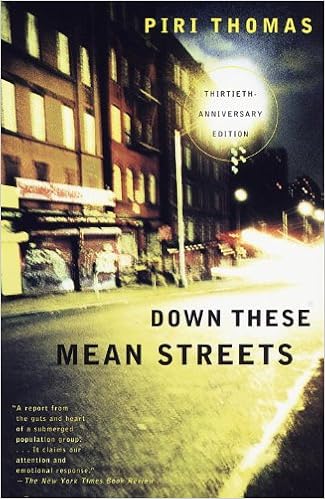
7. Piri Thomas - Down These Mean Streets
There are quite a few great memoirs by Latino authors, but I really like this one because it reads more like a novel than a memoir. It's especially interesting because of how it deals with race. The book follows the story of a Puerto Rican hooligan who grows up on the streets of Spanish Harlem, matures in prison, and finds himself on a journey through the American South. Although this book doesn't have any major female characters to speak of, I still think it's important and worth reading.
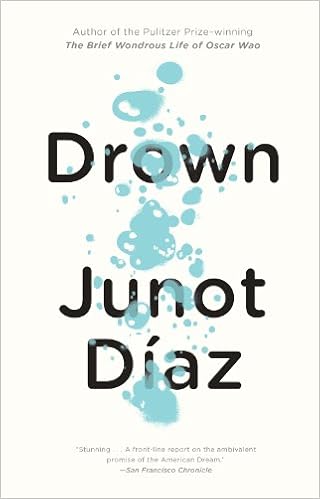
8. Junot Diaz - Drown
This one is a book of short stories, most of them narrated by the same character, Yunior. It covers a wide range of situations a Dominican-American youth might find himself in - I like to think of it as the alternate universe approach to storytelling. The opening story is especially interesting, as it serves as both an introduction to the characters and an allegory for the Dominican Republic under Trujillo's authoritarian regime.
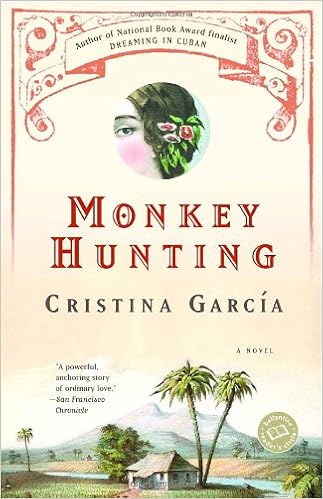
9. Cristina García - Monkey Hunting
This book is great because it comes from a unique perspective. It follows several generations of a Chinese-Cuban-American family, each chapter switching between their lives in China, Cuba, the United States. García does a great job getting us acquainted with the history of Chinese immigration to Cuba and the way Chinese-Cubans have been a part of big historical events on the island. The book also invites us to compare the way immigrants have been treated throughout the Americas, emphasizing the way culture, language, and perceived racial identity affect characters depending on when and where they live.
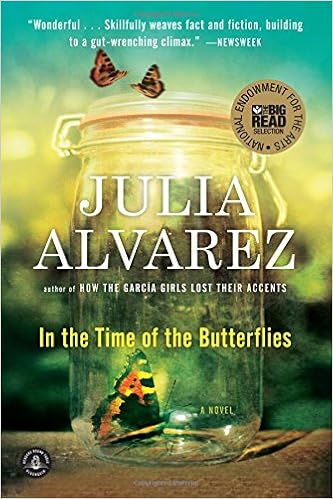
10. Julia Alvarez - In the Time of the Butterflies
This book, based on the real-life Mirabal sisters who plotted against the Trujillo regime in the Dominican Republic, is a fascinating read. Both intimate and broad in scope, it emphasizes the fallibility of memory and the pull of nostalgia. It also highlights the many ways one can fight and, perhaps, overcome tyranny.
This list of my favorite books by Latino authors, in no particular order, does not constitute the entirety of Latino literature, nor does it even list all the really great works out there. There are many, many great Latino texts - something for every taste - but these are ones that really spoke to me, for one reason or another.
Also, though I link to Amazon, you can find these books in most bookstores. I encourage you to buy them from independent booksellers. If you don't have a good bookstore near you, you can easily order from Powell's City of Books in Portland, Oregon or from other independent bookstores online.
And now... the List:
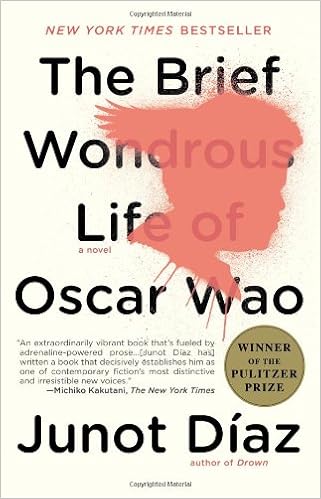
1. Junot Diaz - The Brief Wondrous Life of Oscar Wao
I really love this book. It speaks to the science fiction nerd in me and uses a wide variety of science fiction and fantasy references to give the narration a very specific feel. Diaz writes with a casual, vibrant tone that isn't for everyone, but for me his words invoke a setting and a cast of characters that build a world as rich and real as anything Dickens or Tolkien conjured up (though Diaz's prose sounds nothing like either of them). Oscar, the book's main protagonist, is an overweight Dominican-American nerd whose life is chronicled by various narrators, including his more worldly friend Yunior and his mother, who is haunted by their family's curse. And though the characters are richly nuanced, what I love most about this book is the way it deals with its main themes, like storytelling, identity, and desire.
I've taught this book several times and what I love about it most is its multiplicity. The book embraces a large variety of voices, as each chapter jumps between several different members of the Agüero family. Though the text at first appears to be an allegory about the two faces of Cuba (it sets up the divide between two sisters, one who remains in Cuba and one who fled to the United States), the book is more than a simple two-sided debate about what it means to be Cuban or Cuban-American. The main mystery in the novel (who killed the sisters' mother) hovers over the text like one of the birds that serve as symbols throughout. The way the novel parcels out its meaning and sets up suspense hooked me - it's a good story, but also a very well written, multi-layered musing about how we form our identities and how everything is really only a constructed reality.
3. Oscar Hijuelos - The Mambo Kings Play Songs of Love
A quick plot summary of this book makes it sound less than it is. It follows the rise and fall of two Cuban brothers who try to make it rich playing mambo in New York after they have to flee Cuba. The book is more than just a tale of culture shock, ambition, and greed, however. By framing the story as a nostalgic, semi-lucid memory, Hijuelos gives himself room to tackle larger themes, especially when he touches on the importance of music, the malleability of memory, and the allure and fallibility of dreams. I do have some issues with the way women are treated by the novel (just look at the cover for the 20th Anniversary Edition and you can see what I mean), but it's still worth reading and enjoying.
4. Gloria Anzaldúa - Borderlands / La Frontera
This book of essays and poems is pretty much essential reading. It's a feminist text, a Chicana text, a Latina text, and a text about identity, which actually makes it very hard to label at all. The book tries to tackle identity and its relationship to borders - physical borders and mental borders; borders forced upon us by society and borders we force upon ourselves. It's the kind of book you need to read several times, slowly.
5. Hector Tobar - The Tattooed Soldier
This is another book I absolutely love to teach. The narrative seems to be pretty straightforward. It follows two men - a student who fled Guatemala when his wife was killed by a death squad during the civil war and a soldier who led many death squads during that same period of time. Both men are living in LA, trying to find new lives but haunted by their pasts. The book, however, doesn't allow us to see these men as hero and villain, protagonist and antagonist. It questions how we make our assumptions about people based on what we think we see or on what we want to see. In this book, history isn't as concrete as we'd like it to be, and that's what I love about it. There are no straightforward answers and it makes us question everything we think we know.
6. Loida Maritza Pérez - Geographies of Home
This book is probably the most controversial on my list, not because of the quality of the novel, but because of its contents. The book follows a Dominican-American family, focusing on how each woman in the family tries to live with or cope with violence and oppression. The book spares no feelings and has little sentimentality, but is still able to paint a vivid and emotional picture of lives defined by multiple contradictions and cultures. I especially like this book because it acknowledges the many forms machismo can take within Latino culture and pairs it with the patriarchal violence that can affect women within American society, too.
7. Piri Thomas - Down These Mean Streets
There are quite a few great memoirs by Latino authors, but I really like this one because it reads more like a novel than a memoir. It's especially interesting because of how it deals with race. The book follows the story of a Puerto Rican hooligan who grows up on the streets of Spanish Harlem, matures in prison, and finds himself on a journey through the American South. Although this book doesn't have any major female characters to speak of, I still think it's important and worth reading.
8. Junot Diaz - Drown
This one is a book of short stories, most of them narrated by the same character, Yunior. It covers a wide range of situations a Dominican-American youth might find himself in - I like to think of it as the alternate universe approach to storytelling. The opening story is especially interesting, as it serves as both an introduction to the characters and an allegory for the Dominican Republic under Trujillo's authoritarian regime.
9. Cristina García - Monkey Hunting
This book is great because it comes from a unique perspective. It follows several generations of a Chinese-Cuban-American family, each chapter switching between their lives in China, Cuba, the United States. García does a great job getting us acquainted with the history of Chinese immigration to Cuba and the way Chinese-Cubans have been a part of big historical events on the island. The book also invites us to compare the way immigrants have been treated throughout the Americas, emphasizing the way culture, language, and perceived racial identity affect characters depending on when and where they live.
10. Julia Alvarez - In the Time of the Butterflies
This book, based on the real-life Mirabal sisters who plotted against the Trujillo regime in the Dominican Republic, is a fascinating read. Both intimate and broad in scope, it emphasizes the fallibility of memory and the pull of nostalgia. It also highlights the many ways one can fight and, perhaps, overcome tyranny.
Wednesday, December 9, 2015
Latin American and/or Latino: Which word do I use?
There have been quite a few end of the year book lists posted lately, for obvious reasons (it is December after all). While I normally enjoy such fare, especially right before the MLA convention where I can usually pick up many of the books on those lists. This year, however, something has kept me from enjoying my yearly book browsing. I'm not sure why I haven't noticed this before, but there seem to be a profusion of lists out there that conflate the term Latin American with Latino. And it's really starting to get on my nerves...
Here's why: the terms are not interchangeable. In the strictest sense, Latino literature is literature written in English, usually from within the United States, by someone who has Latin American heritage. This kind of literature - like African-American lit, Asian-American lit, or other hyphenated lit - is influence by multiple cultures, but written in English. And that's an important point. Language matters, as does point of origin, at least when we are discussing labels. (I have some very strong opinions about labeling texts and how it actually does harm, but that is a topic for another day.) Latin American literature, on the other hand, is literature written in Spanish, Portuguese, Creole, or French from anywhere in the Americas (though, interestingly, most people do not include Quebecois literature in this designation). Though most of this literature comes from outside the United States, there are writers who write in Spanish or Portuguese within the US who are still Latin American writers, not American or Latino. (See Reinaldo Arenas for a good example of this - and read him, as his work is striking and etherial).
Some examples will make all this a bit easier to conceptualize. First, let's think about Latin American texts. Academics love to categorize, so this term lumps together national texts based on historical and geographic similarities. The term Latin American allows us to compare - we can look at Colombian and Brazilian and Haitian texts together as part of a shared, interconnected whole that encompasses a certain block of countries bound by their place in our Western view of the world. These countries and their literature are often lumped together this way because 1) they don't write in English, 2) they are parting of the "Developing World", and 3) they seem to have little influence on 'our' own literature (which is a complete falsehood, but one that is perpetuated by translation issues and the otherness of certain texts). We do the same thing to Asian literature or African literature. Literature from Korea is different from what comes out of Japan or India or China, but we tend to lump it all together as Asian. Hell, we even do this to European literature, though the value we place on European lit and the way we treat it in publishing or in school is very different to how we approach, say, African lit (which in itself is controversial because of the way European languages are used as part of colonial oppression in Africa).
So when the Huffington Post writes a list of "8 Latino Authors Everyone Should Know" that only mentions authors writing in Spanish, they are actually listing Latin American authors. All the writers cited wrote in Spanish, all of them are part of the Latin American Literary Boom, and all are hugely important in their home countries. Calling them Latino seem to be an erstwhile, better-late-than-never attempt to all of a sudden recognize the importance of Latin American authors on North American lit. It's a way to include them in 'our' literary legacy. [Side note: many of these authors are HUGELY important in the literary legacy of the United States, but most people outside of actual writers or academics don't normally know that. That's what makes lists like this so frustrating - it becomes a weird kind of cultural appropriation.]
So what does a Latino text actually look like? A different list from the Huffington Post, "23 Books By Latinos that Might Just Change Your Life," intermingles books written in English with books in translation from both Spanish and Portuguese. I have many problems with this list (mostly because it is very heavy on certain authors and elevates some books that really aren't that good), but what really strikes me is how it seems to be saying that the only defining factor for these authors is their 'shared' Latin American heritage. It ignores the differences that make Latino texts separate from Latin American works. Latin American authors have well defined national allegiances. They may write about differing political opinions, come from different economic backgrounds, or set their stories in Paris, Antarctica, or the Moon, but they write as Argentines, as Chileans, as Dominicans. Latinos, too, write from a national standpoint, even though they come from a hyphenated background. Though most Latinos will insist they are just as much Cuban as American, just as much Mexican as New Mexican, the United States is their literary place of origin. Latino texts are national texts in terms of experience and language just as much as they are transnational texts in terms of culture and heritage. Latinos, whatever else they are, are citizens (legal or not) of the United States.
And, just so I can be another of those annoying list compliers, I'll be adding my own top 10 list(s) in my next post. My 10 Favorite Latin American Books and My 10 Favorite Latino Books.
Here's why: the terms are not interchangeable. In the strictest sense, Latino literature is literature written in English, usually from within the United States, by someone who has Latin American heritage. This kind of literature - like African-American lit, Asian-American lit, or other hyphenated lit - is influence by multiple cultures, but written in English. And that's an important point. Language matters, as does point of origin, at least when we are discussing labels. (I have some very strong opinions about labeling texts and how it actually does harm, but that is a topic for another day.) Latin American literature, on the other hand, is literature written in Spanish, Portuguese, Creole, or French from anywhere in the Americas (though, interestingly, most people do not include Quebecois literature in this designation). Though most of this literature comes from outside the United States, there are writers who write in Spanish or Portuguese within the US who are still Latin American writers, not American or Latino. (See Reinaldo Arenas for a good example of this - and read him, as his work is striking and etherial).
Some examples will make all this a bit easier to conceptualize. First, let's think about Latin American texts. Academics love to categorize, so this term lumps together national texts based on historical and geographic similarities. The term Latin American allows us to compare - we can look at Colombian and Brazilian and Haitian texts together as part of a shared, interconnected whole that encompasses a certain block of countries bound by their place in our Western view of the world. These countries and their literature are often lumped together this way because 1) they don't write in English, 2) they are parting of the "Developing World", and 3) they seem to have little influence on 'our' own literature (which is a complete falsehood, but one that is perpetuated by translation issues and the otherness of certain texts). We do the same thing to Asian literature or African literature. Literature from Korea is different from what comes out of Japan or India or China, but we tend to lump it all together as Asian. Hell, we even do this to European literature, though the value we place on European lit and the way we treat it in publishing or in school is very different to how we approach, say, African lit (which in itself is controversial because of the way European languages are used as part of colonial oppression in Africa).
So when the Huffington Post writes a list of "8 Latino Authors Everyone Should Know" that only mentions authors writing in Spanish, they are actually listing Latin American authors. All the writers cited wrote in Spanish, all of them are part of the Latin American Literary Boom, and all are hugely important in their home countries. Calling them Latino seem to be an erstwhile, better-late-than-never attempt to all of a sudden recognize the importance of Latin American authors on North American lit. It's a way to include them in 'our' literary legacy. [Side note: many of these authors are HUGELY important in the literary legacy of the United States, but most people outside of actual writers or academics don't normally know that. That's what makes lists like this so frustrating - it becomes a weird kind of cultural appropriation.]
So what does a Latino text actually look like? A different list from the Huffington Post, "23 Books By Latinos that Might Just Change Your Life," intermingles books written in English with books in translation from both Spanish and Portuguese. I have many problems with this list (mostly because it is very heavy on certain authors and elevates some books that really aren't that good), but what really strikes me is how it seems to be saying that the only defining factor for these authors is their 'shared' Latin American heritage. It ignores the differences that make Latino texts separate from Latin American works. Latin American authors have well defined national allegiances. They may write about differing political opinions, come from different economic backgrounds, or set their stories in Paris, Antarctica, or the Moon, but they write as Argentines, as Chileans, as Dominicans. Latinos, too, write from a national standpoint, even though they come from a hyphenated background. Though most Latinos will insist they are just as much Cuban as American, just as much Mexican as New Mexican, the United States is their literary place of origin. Latino texts are national texts in terms of experience and language just as much as they are transnational texts in terms of culture and heritage. Latinos, whatever else they are, are citizens (legal or not) of the United States.
And, just so I can be another of those annoying list compliers, I'll be adding my own top 10 list(s) in my next post. My 10 Favorite Latin American Books and My 10 Favorite Latino Books.
Subscribe to:
Comments (Atom)