Tuesday, December 29, 2015

My 10 Favorite Latin American Books

A Few Quick Notes:

This is a list of my favorite books by Latin American authors, in no particular order. There is a huge number and variety of Latin American books, and there are so many amazing and wonderful novels, poems, plays, and stories out there. I'm just listing these to let you know what I like and tempt some of you into perhaps reading a few. Enjoy!

Also, though I am linking these texts to Amazon, I encourage everyone to buy from independent booksellers. I am only going to list books that have decent English translations (and I'll link to both the Spanish or Portuguese editions and the translations) - so you don't have to read Spanish or Portuguese to fall in love with any of these books.

And now... the List:
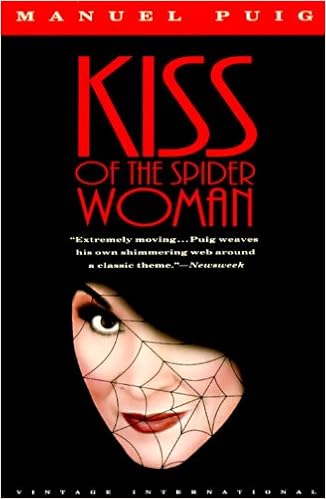


1. Manuel Puig - Kiss of the Spider Woman / El beso de la mujer araña

I really, really love this book. It was part of my dissertation and I've taught it many times. Though it's a novel, it's written as dialogue; there are no speaker tags, no extra descriptions of people, places, or things, and only a few extra pieces of information that come from government documents. The story follows two men imprisoned in Argentina during the early 1970s. They come from completely different backgrounds and share nothing in common, yet are able to communicate and eventually see each other as human beings by talking about movies. I love the way the novel immerses you in culture - film culture, political culture, popular culture, counter-culture. It's a novel about patriarchy, feminism, and queer theory, but it's also a novel about humanity and what it means to be there for someone else. Probably one of my favorite books, period.
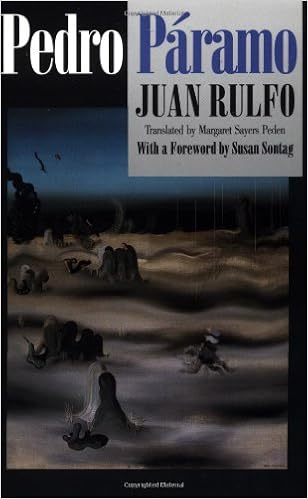


2. Juan Rulfo - Pedro Páramo / Pedro Páramo

I've read this book multiple times for many different purposes. I studied it in college and graduate school and wrote on it for a grad class on Memory and Reenactment. It's such a strange little book. The story starts with a common enough trope - a boy returns to his home to find his father. Yet nothing is common in this novel. The father is not what he seems, the town may or may not be actually real, and the boy may or may not actually get there. Who is dead? Who is alive? Who can you believe? What actually happens? Yet for all these questions, the main point of the novel is clear and haunting.
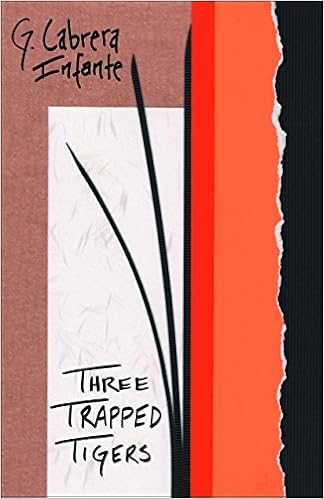


3. Guillermo Cabrera Infante - Three Trapped Tigers / Tres tristes tigres

This book is all about impressions. Reading it is like listening to really complicated jazz - it doesn't make it easy for the reader to find a thread to follow, but once you get into the rhythm of the piece and mesh with the chord progressions, you can just float along with improvisations. The story is ostensibly about a couple of friends out for a night in Havana, Cuba. But the book is really about the essence of Cuba before and after the Revolution, the changes that occurred, the way things affected popular culture, race relations, society, language. Cabrera Infante plays with words, twisting and turning them as he invites the reader to look at everything from multiple angles. I love this book because it isn't so much a novel as a documentary without a narrator.
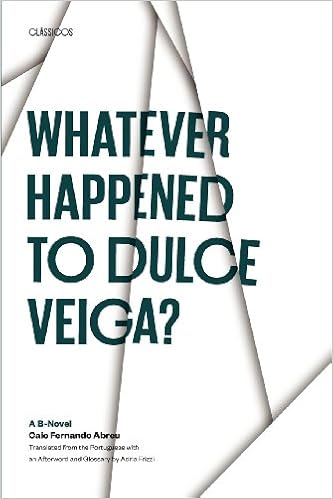


4. Caio Fernando Abreu - Whatever Happened to Dulce Veiga?: A B-Novel / Onde andará Dulce Veiga?: Um romance B

Another book I really, really love. This one was also in my dissertation and I love to teach it. It's the story of a middle aged journalist who has lost everything: his job, his lover, his sense of self. But when he stumbles across the mystery of what happened to Dulce Veiga, a singer who disappeared 20 years earlier, he finds (perhaps) a way forward, a way to deal with his demons and find himself (and Dulce) again. The book deals with so many issues - cultural appropriation, imperialism, AIDS, gender politics, social and economic status, popular culture, etc., etc. - but what really gets me is the way the narrator gets lost in all of it. He is a writer and gets swept up in the words and metaphors needed to tell us about what's going on. It's a beautiful and haunting book.



5. Julio Cortázar - Hopscotch / Rayuela

If you haven't guessed already, I love crazy books. And this one is no exception. The beginning of the book gives you two options for reading: 1) you can simple follow the page numbers and read front to back (leaving out the disposable chapters at the end, of course) or 2) you can follow the numbers listed in the author's note that lead you on a wild goose chase through the novel (this version includes the disposable chapters, but leaves out at least one other chapter, whose sentences are contained word for word in other parts of the text). Of course, you could always try the unwritten option 3) read it any way you choose. The story follows a young man search for his girlfriend in Paris... Or does it follow an Argentine ex-pat going home to Buenos Aires...? Or does it give us writing tips from an author who was just hit by a car...? Everything depends on how you want to read it. I've read it all 3 ways, and I like hopscotch (option 2) the best.
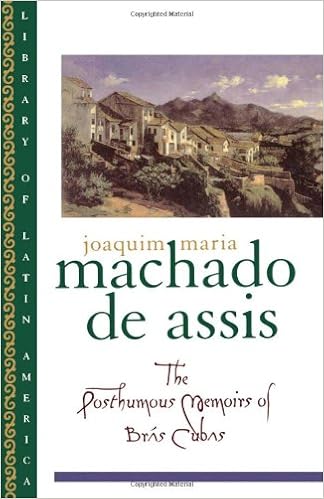


6. Joaquim Maria Machado de Assis - The Posthumous Memoirs of Bras Cubas / Memórias Póstumas de Brás Cubas

The second Brazilian book on my list, this is one of several Machado de Assis novels I could have added. While I love most of his stuff, this book is a particular favorite because it was so ahead of its time. It's both modern and post-modern, even though neither of those terms existed when the book was written in 1881. The book is narrated by a man who has died, a man who wants to reflect on his life and why he ended up the way he did. But can you really believe him? Is he telling the truth or is he trying to flatter himself? Is he hiding anything? Is any of this real? I love this book because nothing is as it seems. And so much of it is about the act of writing itself. The sarcasm and sardonic wit that run through the book doesn't hurt, either.
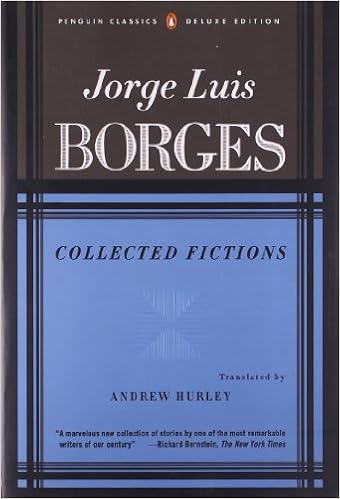


7. Jorge Luis Borges - Collected Fictions / Ficciones, El Aleph, and others

I had a hard time deciding on my favorite Borges story collection, so I decided to pick all of them. There is a very handy collection for English readers, but Spanish readers may have to read his stories by picking up the books separately - Amazon doesn't have a good collected works in stock right now. Borges, in a few words, is simply amazing. Like Poe (one of his favorite authors), Borges wrote only short fiction, both poetry and prose, as well as short nonfiction. His stories is very idiosyncratic and his influence extends far beyond Latin America. I love his stuff because of its emphasis on fiction, on the way fake things, imagined realities, and impossible truths reveal so much about what is really going on in the world. His stories show us why fiction is so important in so many ways. Of course, his stories are also super dense, every esoteric, and not meant for skimming. Not a good beach read... unless you like your books creepy, paradoxical, and labyrinthine.
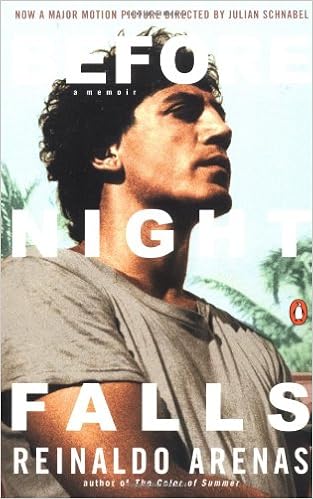


8. Reinaldo Arenas - Before Night Falls / Antes que anochezca 

I like a lot of Arenas' books, but his memoir stands out as a truly important text. Most of the other books on this list are complicated or experimental or just a bit weird, but this one has a quiet poetry to it that allows Arenas' life to pull the reader along. His life, as many have pointed out, sounds more like a Kafka story than reality. The appeal of this book is the story itself, following Arenas from his childhood in rural Cuba to his participation in the Revolution, his life as a writer in the 1960s and 70s, his incarceration for homosexuality, his several attempts to flee Cuba, his eventual escape to New York, and his death as a man without a nation. And though the book feels like fiction (and I usually like fiction better), the crazy reality of it all is what draws me to it.
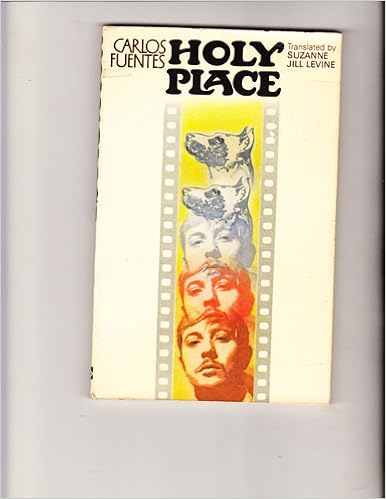


9. Carlos Fuentes - Holy Place / Zona sagrada

Apparently this book is rather hard to find - I don't think it's even in print anymore. I love it anyway. It's absolutely bonkers and probably not Fuentes' best novel, but I have a big soft spot for it. I wrote on it in my dissertation, though I would never, ever try to teach it - it's just too nuts. My dissertation advisor read it, shook his head, and told me I was crazy. The story follows the son of a Mexican movie star who has a hard time separating himself from his mother and her world. The book involves them sharing lovers (maybe?), several pretty crazy dream sequences (or are they real?), and the eventual commitment of the narrator to a lunatic asylum. Of course, the narrator eventually gets out and promptly turns into a dog (or does he?). It's all absolutely wild and over the top, but I love the way it jumps from one insane scene to the next. The book is rife with wild mythological allusions, multiple psychoanalytic theories, and myriad film references and popular culture clichés. It's a crazy mess, but one you can't help but enjoy (well... one I can't help but enjoy).
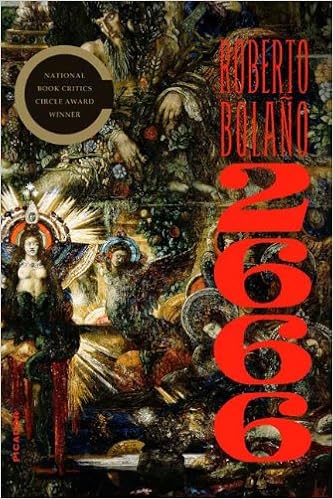


10. Roberto Bolaño - 2666 / 2666

This is probably one of the best books to come out of the last decade, in any language; this novel is simply amazing. It's huge and sweeping, but really hard to put down. It's the search for a killer, the search for an author, and the search for some kind of meaning in a meaningless world. It's about femicide in Mexico, academic posturing and bravado, and the little details that make a life important, even if that life is just another lost in a Mexican border town. This book is deep, dense, and haunting - and important. Read anything you can by Bolaño, but know that this is his masterwork.

Friday, December 11, 2015

My 10 Favorite Latino Books

A Few Quick Notes:

This list of my favorite books by Latino authors, in no particular order, does not constitute the entirety of Latino literature, nor does it even list all the really great works out there. There are many, many great Latino texts - something for every taste - but these are ones that really spoke to me, for one reason or another.

Also, though I link to Amazon, you can find these books in most bookstores. I encourage you to buy them from independent booksellers. If you don't have a good bookstore near you, you can easily order from Powell's City of Books in Portland, Oregon or from other independent bookstores online. 

And now... the List:


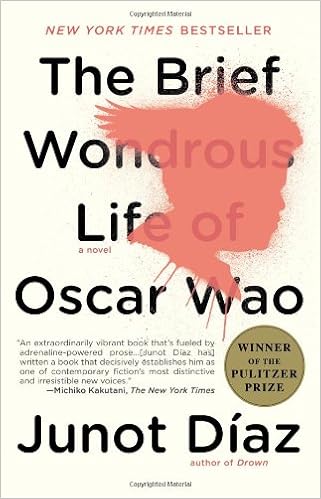
I really love this book. It speaks to the science fiction nerd in me and uses a wide variety of science fiction and fantasy references to give the narration a very specific feel. Diaz writes with a casual, vibrant tone that isn't for everyone, but for me his words invoke a setting and a cast of characters that build a world as rich and real as anything Dickens or Tolkien conjured up (though Diaz's prose sounds nothing like either of them). Oscar, the book's main protagonist, is an overweight Dominican-American nerd whose life is chronicled by various narrators, including his more worldly friend Yunior and his mother, who is haunted by their family's curse. And though the characters are richly nuanced, what I love most about this book is the way it deals with its main themes, like storytelling, identity, and desire.


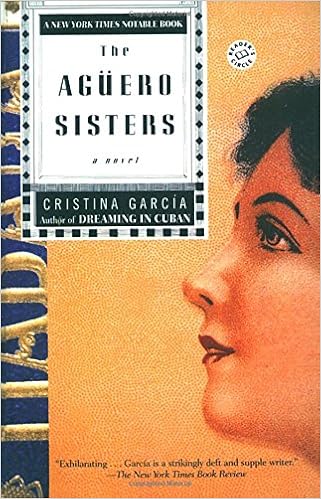
2. Cristina García - The Agüero Sisters

I've taught this book several times and what I love about it most is its multiplicity. The book embraces a large variety of voices, as each chapter jumps between several different members of the Agüero family. Though the text at first appears to be an allegory about the two faces of Cuba (it sets up the divide between two sisters, one who remains in Cuba and one who fled to the United States), the book is more than a simple two-sided debate about what it means to be Cuban or Cuban-American. The main mystery in the novel (who killed the sisters' mother) hovers over the text like one of the birds that serve as symbols throughout. The way the novel parcels out its meaning and sets up suspense hooked me - it's a good story, but also a very well written, multi-layered musing about how we form our identities and how everything is really only a constructed reality.


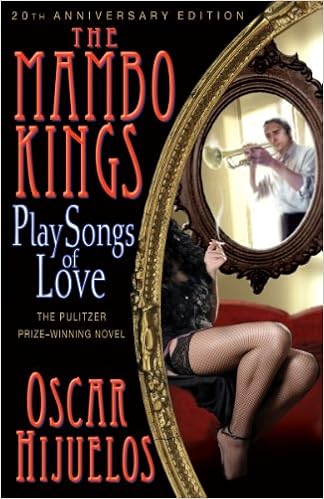
3. Oscar Hijuelos - The Mambo Kings Play Songs of Love

A quick plot summary of this book makes it sound less than it is. It follows the rise and fall of two Cuban brothers who try to make it rich playing mambo in New York after they have to flee Cuba. The book is more than just a tale of culture shock, ambition, and greed, however. By framing the story as a nostalgic, semi-lucid memory, Hijuelos gives himself room to tackle larger themes, especially when he touches on the importance of music, the malleability of memory, and the allure and fallibility of dreams. I do have some issues with the way women are treated by the novel (just look at the cover for the 20th Anniversary Edition and you can see what I mean), but it's still worth reading and enjoying.


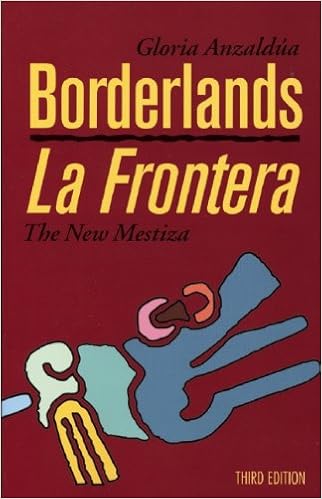
4. Gloria Anzaldúa - Borderlands / La Frontera

This book of essays and poems is pretty much essential reading. It's a feminist text, a Chicana text, a Latina text, and a text about identity, which actually makes it very hard to label at all. The book tries to tackle identity and its relationship to borders - physical borders and mental borders; borders forced upon us by society and borders we force upon ourselves. It's the kind of book you need to read several times, slowly.


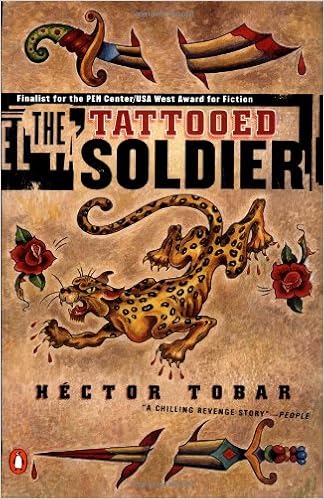
5. Hector Tobar - The Tattooed Soldier

This is another book I absolutely love to teach. The narrative seems to be pretty straightforward. It follows two men - a student who fled Guatemala when his wife was killed by a death squad during the civil war and a soldier who led many death squads during that same period of time. Both men are living in LA, trying to find new lives but haunted by their pasts. The book, however, doesn't allow us to see these men as hero and villain, protagonist and antagonist. It questions how we make our assumptions about people based on what we think we see or on what we want to see. In this book, history isn't as concrete as we'd like it to be, and that's what I love about it. There are no straightforward answers and it makes us question everything we think we know.


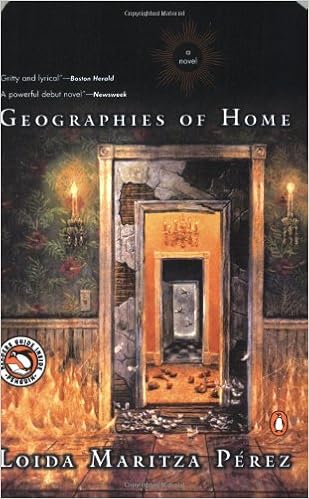
6. Loida Maritza Pérez - Geographies of Home

This book is probably the most controversial on my list, not because of the quality of the novel, but because of its contents. The book follows a Dominican-American family, focusing on how each woman in the family tries to live with or cope with violence and oppression. The book spares no feelings and has little sentimentality, but is still able to paint a vivid and emotional picture of lives defined by multiple contradictions and cultures. I especially like this book because it acknowledges the many forms machismo can take within Latino culture and pairs it with the patriarchal violence that can affect women within American society, too.


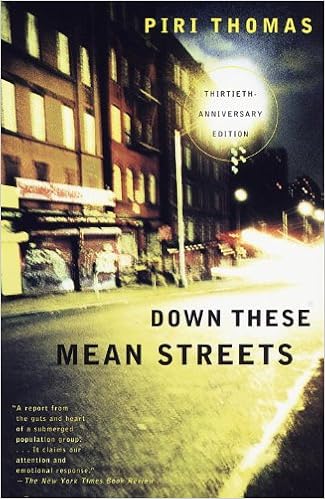
7. Piri Thomas - Down These Mean Streets

There are quite a few great memoirs by Latino authors, but I really like this one because it reads more like a novel than a memoir. It's especially interesting because of how it deals with race. The book follows the story of a Puerto Rican hooligan who grows up on the streets of Spanish Harlem, matures in prison, and finds himself on a journey through the American South. Although this book doesn't have any major female characters to speak of, I still think it's important and worth reading.


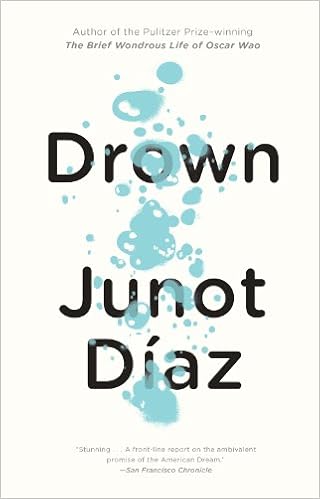
8. Junot Diaz - Drown

This one is a book of short stories, most of them narrated by the same character, Yunior. It covers a wide range of situations a Dominican-American youth might find himself in - I like to think of it as the alternate universe approach to storytelling. The opening story is especially interesting, as it serves as both an introduction to the characters and an allegory for the Dominican Republic under Trujillo's authoritarian regime.


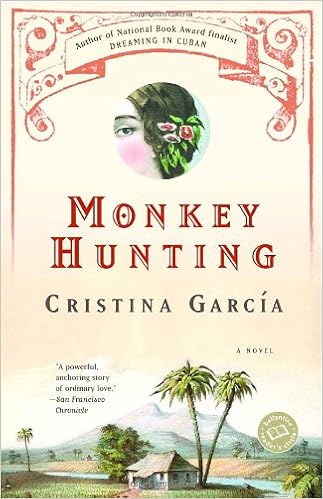
9. Cristina García - Monkey Hunting

This book is great because it comes from a unique perspective. It follows several generations of a Chinese-Cuban-American family, each chapter switching between their lives in China, Cuba, the United States. García does a great job getting us acquainted with the history of Chinese immigration to Cuba and the way Chinese-Cubans have been a part of big historical events on the island. The book also invites us to compare the way immigrants have been treated throughout the Americas, emphasizing the way culture, language, and perceived racial identity affect characters depending on when and where they live.


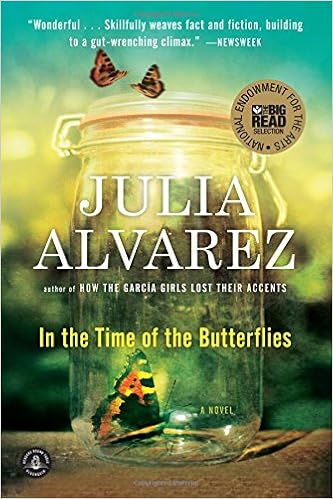
10. Julia Alvarez - In the Time of the Butterflies

This book, based on the real-life Mirabal sisters who plotted against the Trujillo regime in the Dominican Republic, is a fascinating read. Both intimate and broad in scope, it emphasizes the fallibility of memory and the pull of nostalgia. It also highlights the many ways one can fight and, perhaps, overcome tyranny.  


Wednesday, December 9, 2015

Latin American and/or Latino: Which word do I use?

There have been quite a few end of the year book lists posted lately, for obvious reasons (it is December after all). While I normally enjoy such fare, especially right before the MLA convention where I can usually pick up many of the books on those lists. This year, however, something has kept me from enjoying my yearly book browsing. I'm not sure why I haven't noticed this before, but there seem to be a profusion of lists out there that conflate the term Latin American with Latino. And it's really starting to get on my nerves...

Here's why: the terms are not interchangeable. In the strictest sense, Latino literature is literature written in English, usually from within the United States, by someone who has Latin American heritage. This kind of literature - like African-American lit, Asian-American lit, or other hyphenated lit - is influence by multiple cultures, but written in English. And that's an important point. Language matters, as does point of origin, at least when we are discussing labels. (I have some very strong opinions about labeling texts and how it actually does harm, but that is a topic for another day.) Latin American literature, on the other hand, is literature written in Spanish, Portuguese, Creole, or French from anywhere in the Americas (though, interestingly, most people do not include Quebecois literature in this designation). Though most of this literature comes from outside the United States, there are writers who write in Spanish or Portuguese within the US who are still Latin American writers, not American or Latino. (See Reinaldo Arenas for a good example of this - and read him, as his work is striking and etherial).

Some examples will make all this a bit easier to conceptualize. First, let's think about Latin American texts. Academics love to categorize, so this term lumps together national texts based on historical and geographic similarities. The term Latin American allows us to compare - we can look at Colombian and Brazilian and Haitian texts together as part of a shared, interconnected whole that encompasses a certain block of countries bound by their place in our Western view of the world. These countries and their literature are often lumped together this way because 1) they don't write in English, 2) they are parting of the "Developing World", and 3) they seem to have little influence on 'our' own literature (which is a complete falsehood, but one that is perpetuated by translation issues and the otherness of certain texts). We do the same thing to Asian literature or African literature. Literature from Korea is different from what comes out of Japan or India or China, but we tend to lump it all together as Asian. Hell, we even do this to European literature, though the value we place on European lit and the way we treat it in publishing or in school is very different to how we approach, say, African lit (which in itself is controversial because of the way European languages are used as part of colonial oppression in Africa).

So when the Huffington Post writes a list of "8 Latino Authors Everyone Should Know" that only mentions authors writing in Spanish, they are actually listing Latin American authors. All the writers cited wrote in Spanish, all of them are part of the Latin American Literary Boom, and all are hugely important in their home countries. Calling them Latino seem to be an erstwhile, better-late-than-never attempt to all of a sudden recognize the importance of Latin American authors on North American lit. It's a way to include them in 'our' literary legacy. [Side note: many of these authors are HUGELY important in the literary legacy of the United States, but most people outside of actual writers or academics don't normally know that. That's what makes lists like this so frustrating - it becomes a weird kind of cultural appropriation.]

So what does a Latino text actually look like? A different list from the Huffington Post, "23 Books By Latinos that Might Just Change Your Life," intermingles books written in English with books in translation from both Spanish and Portuguese. I have many problems with this list (mostly because it is very heavy on certain authors and elevates some books that really aren't that good), but what really strikes me is how it seems to be saying that the only defining factor for these authors is their 'shared' Latin American heritage. It ignores the differences that make Latino texts separate from Latin American works. Latin American authors have well defined national allegiances. They may write about differing political opinions, come from different economic backgrounds, or set their stories in Paris, Antarctica, or the Moon, but they write as Argentines, as Chileans, as Dominicans. Latinos, too, write from a national standpoint, even though they come from a hyphenated background. Though most Latinos will insist they are just as much Cuban as American, just as much Mexican as New Mexican, the United States is their literary place of origin. Latino texts are national texts in terms of experience and language just as much as they are transnational texts in terms of culture and heritage. Latinos, whatever else they are, are citizens (legal or not) of the United States.

And, just so I can be another of those annoying list compliers, I'll be adding my own top 10 list(s) in my next post. My 10 Favorite Latin American Books and My 10 Favorite Latino Books.

Sunday, November 22, 2015

Zombies: An Origin Story (Part III)

To finish out my zombie post trilogy, I'm going to reference the Atlantic article that inspired me to write all of this in the first place. The article brings up some interesting questions about symbolism and meaning in today's zombie narratives. Mike Mariani, the author, notes:
there’s no longer any clear metaphor. While America may still suffer major social ills—economic inequality, policy brutality, systemic racism, mass murder—zombies have been absorbed as entertainment that’s completely independent from these dilemmas.
I just can't agree with this. Though I don't think zombie fiction, in general, always speaks to these major social ills, there are many examples that use zombies as complicating factors in cultural critique. In other words, there is some really great stuff out there. The BBC's show In the Flesh might be a bit slow, but it packs a strong emotional punch and complicated, dynamic characters. It uses the reintegration of zombies into society as a way to deal with issues like post-dramatic stress, homophobia, and economic inequality. Colson Whitehead's Zone One (one of the few books that scared me enough that I couldn't read it at night) uses zombies and reanimation to question the role of the hero in postmodern society, racial tensions, and 20th and 21st century American exceptionalism. The zombie still has much to say, especially because it becomes a kind of blank slate in terms of symbolism - we can write whatever fear we want onto it, especially when we tweak the normal zombie narrative, giving zombies a chance to play multiple roles within a larger whole. Take Max Brooks' World War Z: in that text, zombies stand in for terrorism, global epidemics like AIDS or Ebola, rampant consumerism, immigration, cold war hysteria... and the list could go on. The plurality of symbolism doesn't negate the meaning behind each metaphors. Plural does not mean unclear - it just means we have to look harder at how characters react to zombies, as each metaphor puts ever more emphasis on characters instead of the monsters they fight.

Later in his article, Mariani also states:
American pop culture has used the zombie, fraught as it is with history, as a form of escapism, rather than a vehicle to explore its own past or current fears. 
This has me even more frustrated. As someone who is constantly trying to defend genre fiction - whether science fiction, fantasy, detective fiction, or romantic fiction, etc. - to my fellow academics and readers alike, this feels like the onslaught that constantly bombards most fantastic literature. Yes, there are many forms of sf/f (science fiction / fantasy) that read as little more than pulp fiction, with few, if any, depths or layers of meaning. But that does not preclude zombie fiction, or any speculative fiction for that matter, from having real meaning and cultural importance. I'm going to briefly look at  The Walking Dead  and Fear the Walking Dead to discuss this a bit more. I'm using these two shows because 1) they are extremely popular and 2) they are specifically referenced in the Atlantic article. (I have issues with how the article addresses post-apocalyptic stories in general, but I think I leave that gripe for later). I'll try to keep myself to vague, non-plot specific stuff to avoid spoilers.*

From what I can tell, much of what Mariani finds problematic in The Walking Dead franchise is its lack of realism. His major issue centers on the escapism inherent in zombie fiction. He finds:
The monster once represented the real-life horrors of dehumanization; now it’s used as a way to fantasize about human beings whose every decision is exalted. 
Though he later acknowledges the death of most of the population as a way to give meaning back to the decisions and actions of the few who survive, he finds that kind of emphasis on an individual's choices worrying. In other words: if there are only a few humans left alive, of course what you decide to do matters... but isn't that just an escapist fantasy for the viewer? We all want to matter in some crucial way, just like the characters on these shows, but we will only find that meaning in fiction, not in reality.

I find escapism, however, more important than Mariani does. The fact that such escapism exists inherently in the show (and is so popular) tell us much about the culture that created it and consumes it. We, as viewers, want to watch these characters find meaning in their lives because we have, perhaps, lost our way in our own lives (perhaps due to economic reasons, or personal issues, or simply through some kind of postmodern malaise). This kind of viewing may be problematic in terms of how we deal with our own issues, but that isn't the show's fault - the escapism it promotes actually sheds light on current cultural feelings of discontent. The show's so-called flaws, its uses of heightened importance and individual agency, reflect the concerns and flaws we can easily find in our own society. Hell, even some of the characters in the show complicate how we view this kind of escapism. (I'm thinking specifically of Gabriel, who is constantly trying to convince himself his actions don't matter, or even Michone, who's escapist tendencies provide some intriguing character development in season 2).

In Fear the Walking Dead, escapism becomes more firmly linked to real life. Some of the characters, especially Daniel Salazar, bring the question of escapism and personal agency into sharp relief. Salazar, an immigrant from El Salvador, left his country for the US because of the Salvadoran civil war. His past (which I won't get into here, but is covered very well in an article from NPR) highlights how one man's choices really can affect society and how escapism works in the 'real' world. History does have a place in these shows, and when this emphasis on escapism works well, it allows characters to evolve beyond stereotypical or archetypal character structuring. The escapist, speculative qualities of these shows, then, have a point, even if an uneven one. We can find meaning in all this - and we don't even have to look very hard for it.

The other main issue Mariani has with The Walking Dead is its setting. He writes:
Zombies, in their American incarnation, strip earth back down to its essential parts: mankind, nature, survival. Think of The Walking Dead’s Georgia, a desolate but oddly idyllic expanse of camps, fields, abandoned motels, and forest clearings. In this way, post-apocalyptic zombie scenarios are as much utopian as they are dystopian. The landscape is cleared of industrial plants, oil derricks, real estate developments, traffic jams, construction sites, and urban blight.
I have some big issues with what Mariani says here. While I agree that utopian impulses abound in The Walking Dead, as in much post-apocalyptic fiction, the way utopia is presented in the show (and in Fear the Walking Dead) immediately renounces any true utopian leanings. That idyllic Georgian forest the article references has more to do with Southern Gothic or a Cormac McCarthy novel than a true utopian, quasi-transcendentalist 'new' society. There are always zombies in the trees, as well as something much more dangerous: other people. Two-legged wolves roam those woods as well giant hordes of zombies. And the sites Mariani claims are missing from the show are all there, in very specific ways, serving a similar purpose as the forest. The seemingly empty cities, railway stations, real estate developments, traffic jams, and construction zones appear to be great places to build new, utopian settlements, far from threats. But all of these idyllic clusters of civilization inevitably fall. And they fall because humanity, for all its many redeeming qualities, is flawed. Unlike the very, very, very frustrating film version of I Am Legend, where a safe haven exists and hope can survive, there is no hope in these woods, nor in the secluded cabins, nor in the perfectly built sustainable housing. If there are utopias here, they all fall, fulfilling one of the main definitions of dystopia: a fallen utopia. This is where much of the meaning in the show comes to the fore - everything has flaws, everything can fall. So how will we continue? How will we survive?

So, yes, The Walking Dead is about mankind, nature, and survival, but in this case, survival depends on how you define the word. And that is what makes the show so interesting - what does survival actually mean? And what is more important, the survival of mankind as a species, the survival of mankind as a civilization, or the survival of our 'humanity'? And since this is a serialized TV show, not a film or a novel, the constant repetition of episodic rising and falling, finding hope and losing it, adds to the shows meaning. Survival will never have one true definition here, and the plurality of its meanings, for me at least, makes it all the more interesting. 

In a nutshell, then, I think Mariani's article dismisses current zombie narratives too easily. Yes, the history of zombies and the cultural appropriation that has led us to the zombies we know today complicate how we can view zombie fiction. And, yes, much of the zombie fare we see today is riddled with clichés, stereotypes, flattened archetypes, and sensationalism. But that doesn't mean the zombie is an unclear metaphor or empty symbol. It just means we need to look at the zombie with new eyes are spend time close reading each text or film or TV show to find the nuances that, added together, make zombie narratives worth our consideration. 

I'm not saying this show is the best thing out there, but to dismiss it, and to dismiss zombie fiction in general, is to dismiss a cultural phenomenon that has more depth than it's given credit for.

Wednesday, November 11, 2015

Zombies: An Origin Story (Part II)

The story of zombies as unwilling somnambulists serving voodoo masters still appears in popular culture today, mostly in comics or comic based TV shows, like the show Constantine or the Hellblazer series that inspired it, or in pulp fiction or B-movies, like I Walked with a Zombie (which was used as the basis for the zombie film discussed in Manuel Puig's Kiss of the Spider Woman). When most people think of zombies, however, they are referring to a creation very different from the Haitian zombies I referenced in my last post. I use the word creation for a reason: these things, formerly human, are an amalgam of many different traditions, cultures, and literary tropes, re-formed through the medium of film. There is a history of zombies on Wikipedia, if you want to look at it, though it is mostly just a list and not an explanation of how things come together to create the zombies we recognize in popular culture today. The post, like most of Wikipedia, is partial and flawed, but nonetheless useful as a starting point.

The zombies we know today have roots reaching back to the Enlightenment and 19th century literature, adding layers to their relationship with Haitian culture and slavery. The idea of reanimation - using science to bring people back from the dead - is a large part of our zombies today. Novels like Mary Shelley's Frankenstein or texts by authors of Weird fiction (including Ambrose Bierce, H.P. Lovecraft, Edgar Rice Burroughs) form part of the foundation for 21st century zombie fare. This obsession with science re-animating corpses can be seen in the way infection drives so many of our zombie films - though we don't try to bring people back to life (we have learned from our literary predecessors in many ways), we are still haunted by the idea that bodies that come back to 'life' leave the soul behind (if there is really anything like a soul in the first place). This is a commentary on our times as much as on our incorporation of a literary heritage, as it presents a very postmodern approach to the idea of reanimation.

There is a specific text, however, that marks a turning point in the evolution of the zombie as a trope, though zombies are never specifically mentioned in the book. Richard Matheson's I Am Legend, written in 1954, is a post-apocalyptic novella based on the premise that the main character, Robert Neville, is the last man standing after a virus has turned everyone else into vampires.* Matheson's vampires, however, though they have the usual aversion to sunlight and garlic, and can be killed by a stake through the heart, do not act like archetypal vampires should. I won't set up too many spoilers here, as the book is definitely worth reading (the science in it is very suspect, but the way Matheson portrays Neville's loneliness is the progenitor for so many of the post-apocalyptic Last Man narratives that come after). What stands out about these vampires is the way they interact with each other and with Neville. They create a mob, mostly mindless, attracted to the activity and life they find in the last man on Earth. They want to kill Neville, for no other reason than the fact he is alive. They come in waves, with no end in sight, and are supremely hard to kill. George Romero used Matheson's novel as inspiration for his 1968 film Night of the Living Dead, which is usually considered the first modern zombie film. For both Romero and Matheson, the focus is not so much on the monsters menacing society, but instead on how individuals and society reacts to those monsters. The mob mentality, the Otherness of the creatures, the fact that those who are killed will return as monsters themselves - all these features say more about the society that created or reacts to the threat than about the threat itself. Of course, most monsters are reflections of the cultures that create them, but zombies, especially these iterations of the zombie trope, are more akin to aliens than to werewolves or Dracula. They are completely unknowable, inhuman things that cannot be reasoned with and cannot be understood.

This is why the zombie has become such a draw over the years since Romero's first zombie film - it gives filmmakers and authors a very interesting way to deal with symbolism and thematics. The zombies are, in some way, a blank slate that can be overwritten with almost any agenda. And zombie fiction becomes a way to critique society at large by creating an apocalyptic event that highlights our worst fears (losing ourselves without the hope of some kind of salvation, as we become zombies ourselves). The second film in Romero's Living Dead series, Dawn of the Dead, is considered by some to be even more influential than the first film, as it very specifically introduces a connection between the zombies as trope and capitalistic mass consumption. The survivors in Dawn of the Dead barricade themselves into a shopping mall (this is what I like to call "let's hit everyone over the head with a baseball bat" symbolism - it's very obvious, but you definitely get the point). This film, and the franchise that extended out from Romero's work, transformed the loose conglomeration of films about zombies into a fully fledged genre. I could go on for quite a while about symbolism and thematics in zombie fiction and film, but I think I'll leave that for another post (looks like we'll have a part III to this series).

To continue with the evolution of the zombie leading up to how we view zombies in the 21st century, there is at least one more iteration that deserves mention. Most of the zombie fare in the1980s and 1990s followed the archetype set out by Romero's films, though the cause of each outbreak differed and symbolism was not consistent. The 2000s brought several different approaches to zombie fare, including films that used the zombie as comedy (see Shaun of the Dead) or as part of larger family dramas (see Fido). 28 Days Later, one of the more important additions to the zombie genre, introduced zombie-like creatures that reference the zombie's reanimation roots. These monsters are not dead, but are instead scientifically infected with rage. The infection creates twitchy, incredibly fast moving predators who, like zombies of the past, are drawn to light or human activity, only subsist on raw flesh, mindlessly attack anyone in proximity, and spread their disease through bites or blood. Though some critics don't consider 28 Days Later to be a true zombie film, as the creatures aren't actually the dead brought back to life, the movie incorporates countless genre tropes and greatly influenced later zombie fare. In part, the film reminded viewers what zombie fiction is supposed to be about: the survivors (the second half of the film is more about how society will kill itself, even without the help of zombies). It also showed filmmakers and audiences that the zombie as a trope is still viable today, even after its connection to consumerism seems cliche. The Walking Dead, both the comic and the tv show, continue that idea, changing small parts of expected zombie genre norms, yet emphasizing the focus on survivors, not zombies, that is so important to the genre as a whole. I'll use The Walking Dead and Fear the Walking Dead as the main examples in the third post in this series...

*Interestingly, I Am Legend isn't just post-apocalyptic because of the vampire threat. The novella alludes to some kind of nuclear explosion that has turned much of California into a wasteland and that may have had some kind of influence on the virus that causes the vampirism. This is just one of many examples that point to WWII and the Cold War as important influences on why zombies have become such an important contemporary popular culture trope. Our fear of mass destruction on a global scale, introduced dramatically by the atomic bomb in the 1940s, has direct influence our fear of the zombie apocalypse.

Friday, November 6, 2015

Zombies: An Origin Story (Part I)

I've been thinking a lot about zombies lately, and about how I'd love to teach a class on the history of zombies and zombie fiction. Funnily enough, as soon as I started setting up a post about it, I came across an article in The Atlantic that addresses the original usage of the term zombie. The article, which you can find here, reminds us that zombies were first found in Haitian slave mythology and goes on to say,
In the hundreds of years since, the zombie myth has been widely appropriated by American pop culture in a way that whitewashes its origins—and turns the undead into a platform for escapist fantasy.  
I'm intrigued by this article for a few reasons, not the least of which because I don't agree with all it says about what zombies have become. I therefore want to lay out a quick overview of how zombies have progressed over the course of the last century and then tackle the question of whether or not they have simply become escapist fantasy or have evolved into something very different from their origins, but just as important in terms of popular culture. I'll use this post to lay out what the article says and say a bit about how popular culture presents zombies before WWII (which, for me, is really the turning point in how zombies are used symbolically). Then I'll add a second post to go into contemporary zombies and what they mean today.

I'm not as conversant with Haitian zombies and the folklore behind them as I want to be. The article I cited earlier spends some time outlining the zombie's roots in Haitian culture, noting that the idea of living death comes from the belief that those who die in slavery will not be able to escape it and must continuing living as slaves forever. This becomes a potent trope for the atrocities of slavery and a way for black Haitians to work through the complicated realities of slavery at the time. After the Haitian revolution the zombie myth becomes entwined with voodoo religious practices, which the article sees as a problematic move away from a more culturally pure symbolism. It states,
The zombies of the Haitian Voodoo religion were a more fractured representation of the anxieties of slavery, mixed as they were with occult trappings of sorcerers and necromancy. Even then, the zombie’s roots in the horrors of slavery were already facing dilution.
The article thus sees every step zombies take away from their original meaning as a step away from true cultural potency. It argues that the 1932 film White Zombie takes this further, introducing white colonials as "interlopers in the zombie legend," taking things to the point where
eventually the memory of Haiti’s colonialist history and the suffering it wrought—millions of Africans worked into the grave—would be excised from the zombie myth for good. 
For me, this raises the question of whether symbolism can evolve without becoming appropriated and therefore weakened, or whether this reassignment of meaning really implies that the trope has become diluted (trope, in this instances, means something figurative, like a metaphor or symbol, that is repeated enough to become universally recognized). Zombies, then, are a colonial issue within their narrative frameworks, but are a post-colonial issue when confronted as cultural products. They are also a transnational issue, as other nations and cultures, particularly the United States, have come to see the trope as their own.

The Atlantic article goes on to say that the zombies we see in popular culture today are devoid of meaning because they are so far removed from where they began. And their prevalence in society has taken away the potency of their use in earlier narratives. While I think there is some legitimacy to these claims, I wonder if the two things cannot live side by side - contemporary zombies and their original counterparts... especially if we acknowledge how far zombies have come.

This is especially interesting because the zombies portrayed in fiction and film before WWII appear so different from those we see today. When Hollywood gets ahold of the zombie trope in the 30s, it does not initially equate zombies with the dead who rise again. Instead, zombies are somnambulists, sleepwalkers or those who live in some kind of comatose state. They are controlled by a voodoo priest or some other nefarious villain, but can be woken from that state if the villain dies. Nor can the zombie spread it's fate like a disease. Zombies and whatever evil they do can be traced back to one man or woman, and though multiple deaths usually occur in zombies films, they are always attributed to either the main antagonist or are considered collateral damage. At this stage, then, zombies are symbols of both colonial oppression and fear of the exotic Other.  Interestingly, the Haitian zombies (who are almost always present in these films) are usually just background characters, like henchmen. Things only become dire when a white man or woman is taken and transformed.

These zombies, then, are not the zombies that inhabit The Walking Dead or 28 Days Later. Could we, perhaps, therefore see them as distinct tropes? (I don't think we can, but it's a worthwhile question.) And if they are not distinct, what does that mean for how we view zombies now? That's the question I'll address in my next post...

Sunday, October 11, 2015

Cyberpunk and the Techno-thriller

First, a quick recognition of where the idea for this post came from. The other day I had a conversation with someone about the USA network show Mr. Robot and how it was (or wasn't) cyberpunk. I think it is very much a cyberpunk show, one of the few shows that can claim the title, in fact; but this someone called such labeling blasphemy. So, in part, this post is to discuss why I think Mr. Robot is cyberpunk and why calling it thus is neither sacrilegious to the show nor to cyberpunk in general. I was also inspired by a reading and signing I attended a few days ago. I got to see my literary idol, William Gibson, read from his new novel The Peripheral(I'm linking to a review so as not to lead you to spoilers.) I love Gibson's books for many, many reasons, and I was very happy to find out that he is just as astute and witty and quick in person as he seems from his prose. During the Q&A section of the reading, someone in the audience asked if Gibson thought cyberpunk was viable now, as it had already predicted today. Did it have a place in our consciousness and our culture or had it already run its course? (That's my phrasing of the question, as the someone who said it was a bit more aggressive with his words.) Gibson's reply was to name an author who is still keeping the cyberpunk aesthetic alive, though I would argue that Gibson himself it doing just that with his own work. I have not read his suggestion yet - Ned Beauman's The Glow - but it's on its way here as I type.

This question of whether cyberpunk is viable today inspired me to think about the difference between cyberpunk and the techno-thriller in earnest. What's the difference? Why is Mr. Robot cyberpunk when CSI:Cyber isn't? Though that question seems to have an easy answer, I think going through some of the details will really help us to understand what cyberpunk is, not so much in terms of the many manifestos that have created the genre and the academic work that has been done on it (my own included), but in terms of its weight in popular culture. This is going to be about the popular vision of cyberpunk as a thing we interact with for entertainment, not a treatise on cyberpunk as the important literary genre and movement that has led us into the 21st century. (If you want something on the more academic side of things, try reading a chapter or two from The Cybercultures Reader or Donna Haraway's "A Cyborg Manifesto" or Bruce Sterling's Preface to Mirrorshades.)

So... cyberpunk? What is it? TV Tropes defines it here and Wikipedia discusses it here. Both sites agree about some aspects of the genre, though I think TV Tropes comes closer to listing what it really encompasses. (We won't go into my issues with post-cyberpunk, though I may talk about that in a later post). To make things easier, let's list the main ingredients of cyberpunk so we can see how it differentiates itself from the techno-thriller:

1. To begin with, cyberpunk deals with the future. That future may be tomorrow, it may be 20 years from now, or it may be a generation or two from now - but it won't be centuries hence. What's important is that cyberpunk speaks to the present time, even as it envisions the future. This isn't a future that is trying to predict something; instead, it is a future that reveals what's wrong with today. And that future doesn't have to be in our timeline. As it lives in the speculative fiction section of the science fiction universe, cyberpunk can be a possible tomorrow, not just a potential one.

2. Cyberpunk is also dystopian. The futures it portrays are usually caught in some kind of downfall created by the commodification of culture and late capitalism. Life isn't that great, at least not for the protagonists, and there is a big split between the haves and the have-nots. The dystopias within cyberpunk are usually based in some form of city noir. Most of the action will take place in the dirty, crime ridden streets of some megalopolis, though that doesn't mean there isn't some shining city on a hill somewhere else in that world. The haves get the nice places, while our protagonists have to deal with the rest.

3. The hero, or heroes, usually come from the lower rungs of society, or the outskirts. They tend to work against the big corporations in the overall plot scheme, though they also sometimes nominally work for those same companies in some way or another over the course of the story. These protagonists are whistleblowers, hackers, thieves, misfits, or madmen. They somehow don't fit in to the "perfect" world the rich and mighty are trying to sell to the masses. This is where the punk part of cyberpunk comes from. Cyberpunk's grittiness, its 'realism' and rawness, comes from these punk roots.

4. Cyberpunk is very much about technology, though in most cases that technology is neither good nor bad. The tech therefore takes on certain attributes depending on who is using it and what they are using it for. You can have evil malware or AIs who have a part in trying to destroy humanity, but those same AIs or malware can be used by hackers to try and save humanity. Above all, however, the protagonists must use technology in some way to try and overthrow their dystopia. And the technology needs to feel real, even if it hasn't been invented yet, since cyberpunk's target audience wants to know how all of this works.

5. The outcome of these narratives tend to be very ambivalent. Many cyberpunk stories end with few major changes in society. They can become nihilistic in some circumstances, though there may be a few small gains over the course of the story. Society is never fully put right, and if the hero does get some kind of happy ending, it's probably not going to last, nor change the world in the long run.

6. Cyberpunk plots are usually based on detective fiction, especially the settings, plot structures, and characters of film noir detective narratives. Cyberpunk therefore tends to have convoluted plot lines, heists, multiple locations or settings, and an emphasis on dramatic tension and emotionally heavy backstories for even the smallest characters.

But how is this different from the techno-thriller? First, the techno-thriller usually takes place in the present, so it can keep its target audience from getting too lost. While it deals with science and tech, the techno-thriller is not actually science fiction, so it expects something different from its readers or viewers - the future would take too much explaining. The techno-thriller therefore doesn't get into many of the technical details of its technology, as its audience is usually not all that knowledgeable about that kind of thing. These stories also have smaller stakes: this isn't about changing the world or overthrowing a conglomerate; instead, it's about clearing somebody's name or winning a trial or solving a crime. The heroes in these narratives don't have to be very punk, either. They tend to be normal, middle class citizens, not hackers. People who are out to right a wrong, yes, but also people who have fallen from some height (like their middle class lives) and are trying to get back to where they were. And, usually, they find some kind of resolution at the end of their stories (mostly because they aren't actually trying to save the world).

A good example to explain all this is the difference between two mediocre films (that I also happen to love) that came out around the same time: Hackers (1995) and Sneakers (1992). Hackers is a cyberpunk film, while Sneakers is a techno-thriller. Hackers tries for a punk aesthetic, and though it does not take place very far into the future, the use of the Internet in the movie goes beyond what most of the general public could do at the time, which gave it a futuristic feel. And while the film seems watered down compared to, say, Blade Runner (the quintessential cyberpunk movie) or The Matrix, it still ticks enough of the boxes to count as cyberpunk. The eponymous hackers are misfits who fight an evil corporation, and though they win in the end, that doesn't change the status quo - it just lets a boy and a girl make out in a roof top pool. (Yes, I know I'm stretching this a bit, but not all the requirements have to be fulfilled perfectly). Sneakers, on the other hand, has many of the hallmarks of a cyberpunk film (tech, evil corporation, convoluted plot, anti-capitalistic characters), but it has no punk aesthetic - it's mostly a bunch of middle aged, middle class guys who happen to be really good at tech stuff. And that automatically disqualifies the movie from being cyberpunk. The same goes for films like The Net or the more recent Blackhat. You can't have cyberpunk without the punk. It's like trying to argue that Fight Club is a cyberpunk movie: it's definitely a punk film, but it has nothing cyber in it, hence it's not cyberpunk. (I know it's more complicated than that, but you get the point.)

So, to finish... is Mr. Robot cyberpunk? Yes! 1. It takes place in a very close tomorrow. I don't want to include spoilers here, but the last few episodes show us the difference between their world and ours. 2. Evil Corp runs the show and has fingers in all sorts of pies, which automatically puts the show in a late capitalistic dystopia. 3. Elliot is about as mad a misfit as you can get, as well as being a hacker. His life in New York also gives the show its punk aesthetic, down to the drug use and random acts of violence. 4. There is a ton a tech in here, and it all feels very real. 5. The show isn't over, but nihilism seems like a good word to use at this point. 6. Each episode is a mini-caper, leading us down the road to the end of the world as we know it - and by the end, I doubt any of us will feel fine.

Thursday, October 1, 2015

On Things that Seem New, but Aren't

I finally had a chance to see the first season of Black Mirror a few days ago and had mixed feelings about it. Aesthetically, I quite liked the show. It's dark humor is well done, the acting is very good, and the scripts are interesting without being too preachy about the individual dystopias each episode creates. We are immediately dropped into distinct worlds during each episode, without overlong descriptive devises or narrative gags to help us understand how things work. In short, the show does what good science fiction ought to do. (Most call this show speculative fiction, but as the episodes I saw, including "The National Anthem," "Fifteen Million Merits," and "The Entire History of You,"all refer to sf tropes, I'm going to call it all as science fiction.) I especially like how all three episodes, though distinct, deal with the similar ideas: our enslavement to media, our self-destructive natures, a growing lack of connection between people, etc... We can even see the first season as variations on the same theme - it all looks very different, but in the end says the same thing three times. Which, in my opinion, makes the show all the more potent. 

My issue, then, is with reactions to the show. As recently as today, io9 published this story about Black Mirror. I agree with many of the things said in the piece, but what gets me is what they say here:
But while technology (and a healthy fear of it) have always been hallmarks of good science fiction, what makes Black Mirror work so well, what makes it so chilling and intense, is that among the technology it’s a deeply human series.
The focus is always stunningly real. It’s never about the ramifications of technology on a wider societal level but through the lens of a handful of characters. The technology, as scary as it can be, is never the element directly responsible for the messed-up scenarios that play out in each episode; it’s the people who make, use, and (almost worryingly above all) normalize it. It’s what people do, what they stoop themselves to, that makes the show so engaging. The technology itself is just a hook to take a look at ourselves in a fascinatingly dark manner.
These paragraphs make it sound as if science fiction is only about technology - that good sf isn't about people at all. It's about robots and cyborgs and aliens, but not about individuals. And I have a problem with that. Good sf does exactly what io9 outlines - it talks about people put in odd situations. Yes, some sf deals with things on that "wider societal level" with less emphasis on the smaller actors within those larger frameworks. Authors like Isaac Asimov come to mind, or series like Star Trek. But even those examples betray the false logic of the claim that sf only deals with big ideas instead of small, human struggles. Asimov was king of the short story as much as he was a writer of huge, nebulous chronicles like the Foundation series. And Star Trek was all about the people, not the technology, even if the cell phone was based on Kirk's communicator. And what about so many other sf shows and books that focus on the people? What about Battlestar Galactica, which eschews almost all technology (aside from the cylons and the spaceships)? It's pretty much The West Wing in space. What about anything by Margaret Atwood, especially The Handmaid's Tale? Heck, why not read A Canticle for Leibowitz, as it focuses on how the individual affects the course of history in relation to technology in very much the same way Black Mirror does?

And that's what really gets me, in a nutshell. Reviewers don't tend to acknowledge the huge backlog of sf novels and shows and movies that have led to Black Mirror. The show isn't anything new, really, at least in terms of tropes and themes and even its message. It's a really, really good show, don't get me wrong. Its darkness, its humor, the way it creates a narrative based on these themes - these aspects of each episode are innovative and create exceptional TV. But it's not saying anything new. It's 1984. It's "We Can Remember it For You Wholesale." It's Never Let Me Go or "Harrison Bergeron" or anything by Ray Bradbury. The show owes so much of what it does to so many others. And it acknowledges this in the way it uses it motifs. It gives nods to its predecessors, cultural or literary, in many ways. But the critics and the audience don't do that. And I really wish they would. There is so much good sf out there, stuff just as good as or better than Black Mirror, stuff that emphasizes the human within the tech, that focuses on how individuals make the system, not the other way around... but the reaction to the show hasn't encouraged fans to go out and find more just like it. And that's a shame.